Thursday, May 5, 2011

Brown Students Win for Third Consecutive Year at RI Business Plan Competition

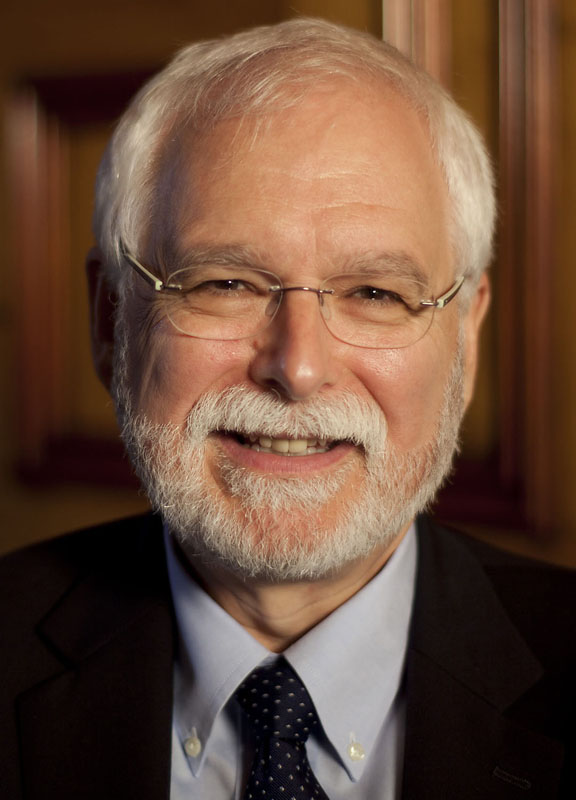
warshayBrown professor Danny Warshay's Entrepreneurship & New Ventures ENGN1930x course has translated into great success for students in the Rhode Island Business Plan Competition over the past three years. This year's winner in the student track were Dan Aziz '11, Gordon Hood '11, William Do '12, and Kuni Natsuki '11 who developed the plan for PriWater, a prenatal beverage supplement to help reduce birth defects. Last year, Warshay’s students won with Speramus (www.speramus.com), an online fundraising platform that matches donors with individual support opportunities. The year before, they won with Runa (www.runa.org), a company that produces energy drinks made from the leaves of an Amazonian tree. Runa continues to make excellent progress and has raised over $1 million from investors and has increased distribution into WholeFoods.

Here is the Providence Journal recap of the event:


3 business plans recognized by RIBX competition


01:00 AM EDT on Wednesday, May 4, 2011
By Kate Bramson

Journal Staff Writer
PROVIDENCE — Their entrepreneurship professor told the three Brown University undergraduates to think big, and he urged them to get out and talk to the people who would eventually use the product they dreamed of developing in his class.
“Danny preaches bottom-up research,” said senior Robert D. [Dan] Aziz about Prof. Danny Warshay, who has taught the class each of his five years at Brown.
As his students began crafting an idea for a prenatal beverage supplement to give pregnant women the vitamins they need without the nasty side effects of large prenatal pills, junior William Do went to the Whole Foods Market on North Main Street and started chatting with a pregnant woman. She told him women have what they call “horse pills,” but no drink supplement.
Warshay said his students then spoke with 150 pregnant women before developing what they call PriWater. The supplement is designed to reduce birth defects, the reason for prenatal pills.
As Aziz presented the group’s product idea Tuesday in the Rhode Island Business Plan Competition at RIBX 2011, he told a crowd of more than 100 what their research revealed. Only 45 percent of pregnant women take prenatal pills because they’re hard to digest and cause constipation and nausea.
“Overall, women hate them, and if you’re a man, you should just try it for your wife,” Aziz said, drawing laughter as he spoke with ease. “We talk about destroying the horse pill forever.”
The judges of the annual competition agreed that Aziz, Do and Gordon Hood have a good idea. PriWater took the top prize in the student track –– $25,000 in cash and $28,000 in services.
It’s the third year in a row Warshay’s students have walked off with the top student prize at the competition, which attracted 103 applications this year, up from 61 last year.
Their project drew praise from one of the competition’s judges, Stephen Lane, president of Ximedica and a member of the state Economic Development Corporation board.
“We need to mint him,” Lane said of Warshay.
Last year, Warshay’s students won with Speramus, an online fundraising platform that matches donors with individual support opportunities. The year before, they won with Runa, a company that produces energy drinks made from the leaves of an Amazonian tree.
Winning the biggest prize in this year’s competition was AmbiLabs, a Warren company that makes systems to monitor air pollution. Named the “green” winner, AmbiLabs won $50,000 in cash and $26,000 in services.
“I’m astounded that we won,” General Manager Andy Tolley said, noting the “fantastic” field of finalists.
At a reception for winners and finalists, Tolley said the reason AmbiLabs entered the competition was to see if others believed in their idea.
Tolley said his company’s work is gaining traction. The Army recently contacted AmbiLabs about its devices, and the company just took an order to provide a pollution-monitoring device in Saudi Arabia, its first international order.
The third winner — this one in the entrepreneur track — was Lucidux, a Providence venture led by East Providence resident Jason Harry. Lucidux, which also won $25,000 in cash and $28,000 in services, is developing software to provide three-dimensional images to help surgeons perform minimally invasive procedures.
Harry told how Lucidux is working to revolutionize what surgeons see with cameras inserted into patients, essentially eliminating what he calls “one-eyed surgery.”


Brown Professor Alan Needleman will receive the 2011 Timoshenko Medal


Alan Needleman,  emeritus professor of engineering at Brown, will receive the 2011 Timoshenko Medal.
Alan Needleman has been a leading innovator in developing the mechanics of large plastic deformation and  fracture.  His career has been intertwined with the rise of the field of computational solid mechanics.  To this field he has made many significant and lasting contributions, usually as the first to demonstrate that computational approaches are both feasible and likely to yield insight.
Needleman performed the first finite element calculations of void growth and coalescence (in early 1970's), of necking in tensile bars (in 1972), of debonding using models which embed cohesive zones (in 1983), and ductile crack growth using models which simulate void nucleation, growth and coalescence (in the early 80's). There are more major contributions. He was one of the first to perform accurate numerical computation of the development of shear band localizations in realistic geometries, and the pictures of emerging bands which came out of the studies where widely regarded as "classics". He has simulated crack growth patterns, including bifurcation and branching, in the dynamic fracture of brittle materials. Most recently, he originated and still drives the effort to develop computational methods to predict macroscopic stress-strain behavior based on discrete dislocation mechanics. In all these cases, his primary contribution has been to lead the way and to demonstrate the feasibility and power of computational approaches to the particular phenomenon.
Needleman is ranked among the most highly cited researchers worldwide, in both the engineering and materials science categories. He served as Dean of Engineering at Brown University, and on the Executive Committee of the Applied Mechanics Division of ASME. He is a member of the US National Academy of Engineering.  

Tuesday, May 3, 2011

Brown Engineering Hosts "Physical Processes in the Environment” STEM Outreach for Local 4th Graders

On April 29, 2011, approximately fifty children in grade four from the Martin Luther King Elementary School visited the Brown engineering and physics labs of Professor Ian Dell’Antonio, physics graduate student Shawna Hollen, senior technical assistant Brian Corkum, and engineering graduate student Jennet Toyjanova in the Barus and Holley building. The event was organized by Karen Haberstroh '95, Director of STEM Outreach and Assistant Professor of Engineering (Research).

Such tours have further allowed Providence schools to witness graduate fellow and faculty research first-hand, to take advantage of science facilities at the University, and to help bridge the gap between K-12 students and the college experience.

Brown’s Graduate STEM fellows in K-12 education (GK-12) Program “Physical Processes in the Environment” supports Brown graduate fellows who work directly with the Providence Public Schools, along with a series of training and enrichment programs for K-12 teachers and students. Graduate Fellows and partner teachers participate in pedagogical training and professional development workshops, which provide the necessary background for developing and delivering hands-on and research-based activities in line with Rhode Island’s Grade Span Expectations for science. Along with these research-based activities, GK-12 has organized laboratory visits and outreach events on the Brown campus. 

Howard Greis '48; entrepreneur was tirelessly creative; at 85


Howard Greis '48, president of a Worcester-based metal forming technology firm, entrepreneur, and Brown Engineering Alumni Medal recipient in 2002, died on April 21.

Howard Arthur Greis, president of a Worcester-based metal forming technology firm and a former member of the state Board of Education, died April 21 of heart failure in his home in Holden. He was 85.
Mr. Greis went to work on the day he died, and friends and family said he took pride in going to work every day. Colleagues considered him the world’s leading authority on roll forming metals.
“If he were alive today, he would be at his desk solving problems,’’ said Matthew Stepanski, former president of the Central Massachusetts Employer Association. “He was always thinking about the next project.’’
Born in Brooklyn, N.Y., Mr. Greis graduated from East Rockaway (N.Y.) High School in 1943. He entered Brown University through a Navy program prior to attending midshipmen’s school at Notre Dame University. He graduated first in his class and was commissioned as an ensign. He was called into active duty during World War II and was stationed at the Naval Ordnance Lab in Washington, D.C., where he developed rocket fuses.
Mr. Greis returned to Brown, where he was a three-sport athlete, and received a bachelor’s degree in mechanical engineering in 1948. The following year, he earned a master’s degree in mechanical engineering from Harvard University.
Mr. Greis worked for various engineering firms in New Jersey throughout the 1950s, developing products for many industries.
He also began his career as a serial entrepreneur, starting consulting firms HAG & Associates in 1953 and Control Molding Corp. in 1955.
In 1962, Mr. Greis and his wife, the former Virginia Peyton Chivers, started Kinefac Corp. Kinefac, which specializes in metal forming technology, is based in Worcester and has offices in Shanghai. Its work ranges from the forming of wire coils for medical devices to the manufacture of dies and centrifuges used in metalworking.
According to his daughter Leslie of Cambridge, his designs can be seen in a diverse set of products, including mine roof bolts, dental drills, nuclear power plant tie rods, airplane fasteners, and catheter guide wires. Kinefac’s work can be found throughout the world, including, in Paris, the Louvre Museum’s glass pyramid entrance, which is supported by a joint system designed and rolled at Kinefac.
“My father lived the entrepreneurial spirit every day,’’ Leslie said. “He always had a wonderful curiosity about how to create things. At Christmas as a child, I got gifts that I had to get down on the floor and put together, and my father would help.’’
Mr. Greis’s curiosity extended to designing and building the family’s five-bedroom, three-bathroom home in Holden in 1972. The whole family was enlisted in the yearlong project.
“Life was his hobby,’’ Leslie said. “He was enthusiastic about life, whether it was traveling, spending time with his family, or exploring new projects.’’
Mr. Greis wrote many technical articles and papers on mechanical engineering and received numerous industry awards and honors, including the Brown Engineering Alumni Medal given by Brown University for lifetime contributions to the field of engineering in 2002.
Mr. Greis also had a strong interest in education. He was first elected to the Wachusett Regional School Committee in 1965 and became chairman and was one of the original faculty members of the school’s science seminar program, which remains the oldest continuously-run program for gifted students in Massachusetts public high schools. In 1976, he received an appointment from Governor Michael S. Dukakis to serve a five-year term on the Massachusetts Board of Education, and he was appointed for a second term by Governor Edward King.
During his tenure, Mr. Greis dealt with the pressing issues of desegregation and busing in the late 1970s. He was also on the board when it decided to reduce the cost to local communities of implementing the state’s special education law.
Harold M. Lane Jr., a former state representative from Worcester, met Mr. Greis during the 1970s when the latter was working for the Wachusett Regional school system.
“Howard had a strong belief that education would solve everything,’’ Lane said. “He was just as devoted to educating others as he was about running his business, and he gained great respect from others for that.’’
Mr. Greis also believed American industry needed to stay competitive globally in science, engineering, and technology. Locally, he served as a director and vice chairman of the Associated Industries of Massachusetts in Boston and on the advisory board of the mechanical engineering department of Worcester Polytechnic Institute. In addition to regularly testifying before Congress and serving on several special interest committees in Washington, in 1986 he cofounded the National Center for Manufacturing Sciences in Ann Arbor, Mich., the largest research and development consortium serving North American manufacturing.
“Howard felt strongly about America not falling behind,’’ said Rick Jarman, the center’s president and chief executive. “What struck me about him was that he was able to envision what new technologies would come in the future, and how our industry needed to adapt 30 years ago. These are all discussions only beginning to be had these days. He was a true American visionary.’’
In addition to his daughter Leslie, Mr. Greis leaves three other children, Noel of Chapel Hill, N.C.; Frederick of Madison, N.J.; and Carolyn of Chevy Chase, Md.; and several grandchildren. His wife died two years ago.A memorial service has been held.
April 30, 2011|By Talia WhyteBoston Globe Correspondent

Friday, April 29, 2011

Sarah Huebscher '10 ScM '11 Named Finalist in RI Business Plan Competition

Brown's Sarah Huebscher '10 ScM '11, who completed her bachelor's degree in engineering and is now a current master's degree student in the Program in Innovation Management and Entrepreneurship (PRIME), has been selected as one of eight finalists in the Rhode Island Business Plan Competition.

Huebscher is one of just three finalists in the student track. Her proposal was for PriviCare, a business that would provide at home diagnostic devices for common infections and diseases.

The finalists are competing for $250,000 in prizes. Final presentations are scheduled for May 3 at the RIBX business expo at the R.I Convention Center. Winners will be announced following the presentations. A top overall winner will take home a $50,000 cash prize.

Providence Business News story:
http://www.pbn.com/RI-Biz-Plan-Competition-announces-finalists,57682 

Brown Engineering Alumnus to Live Tweet NASA Shuttle Launch


Shareef Jackson '02, a Brown Engineering alumnus, is one of 150 tweeps chosen from more than 4,000 applicants scheduled to live tweet during the launch of the space shuttle Endeavor. You can follow him on Twitter @ShareefJackson.   

While looking back on his childhood, thirty-year-old Shareef Jackson always wanted to enjoy a summer at space camp while growing up, but he just never made it.shareef
“I’ve always been a sciency-person. I loved it as a kid, I did engineering in colleges, took a lot of astronomy classes,” he says.
His passion for astronomy continues to develop through his adult life, and in February, he started a space and technology blog from his home in West Philadelphia.
While he still wishes he could go back to his childhood and pretend to be walking on the moon at camp, he never could have imagined winning something even more out of this world: a pass to the shuttle launch of the Endeavor in Florida.
“It’s a good example of government engaging with citizens, trying to really engage in society,” he says.
Jackson is among 149 other tweeps who were randomly selected of approximately 4,000 applicants to live tweet during the launch, as well as “with the opportunity to tour the center, view the shuttle launch and speak with NASA managers, astronauts, shuttle technicians and engineers. The event also will provide participants the opportunity to meet fellow tweeps and NASA’s social media team,” according to NASA’s website.
The chosen tweeps must pay for their own travel expenses and accommodations, but he says it’s totally worth it.
“When I first started my blog, my first post was called, Lift Off. I wrote that I would go to a shuttle launch someday, but I really didn’t expect it to be this soon.”
Space Shuttle Endeavour is slated to launch on April 29th. Be sure to follow Jackson on Twitterhere, and Philly Weekly here.
- courtesy of Matthew Petrillo/PhillyNow (originally published 4/5/11)

Wednesday, April 27, 2011

Brown Alumna Kareen Riviere '03 Starts Foundation to Help Women in Haiti


Kareen Riviere  '03, a Brown engineering alumna with family in Haiti, started The Empower Foundation in December 2010 to help make "a real difference" for women and girls in Haiti. 


New Organization: The Empower Foundation Helps Haitian Women Combat Sexual Violence

(PRLEAP.COM) (Silver Spring, Md. - April 20, 2011) - "He grabbed me, stuck a gun to me. Then he and several men raped me near my daughter." Sexual assaults against women in Haiti have reached epidemic proportions since the country’s devastating earthquake in January 2010.
According to Amnesty International, more than 250 cases of rape were reported in Haiti’s 1,150 camps in the first 150 days after the earthquake. Some victims are three and five years old. The Empower Foundation (www.theempowerfoundation.org) says "something must be done now," per the organization’s founder, Kareen Riviere, Ph.D.

"The Empower Foundation is my way of getting off the sidelines and making a real difference," says Riviere. Riviere, who has family in Haiti, wanted to help the women and girls, believing they "are important players in transforming the future of Haiti."

The Silver Spring, Maryland-based non-profit was founded in December 2010 by Riviere with a mission of "empowering communities to have a voice, take action, and improve their quality of life."

The quake’s destruction left more than 1 million people homeless with women living in unsecure tent camps. Nightly, women use public latrines in poorly lit areas, vulnerable to men who may be waiting to attack them.

Police protection is nearly nonexistent, and prosecution of offenders is uncertain, making the crime repeatable. This inspired Riviere and others to enact the organization’s first mission, Operation: Empower Haiti. (Read more in The Empower Foundation’s February 2011 Report, "Operation: Empower Haiti.")

The Empower Foundation will prepare more than 1,000 safety kits for Partners in Health to deliver to its clinics in Haiti. The safety kits will contain a small battery-free flashlight, safety whistle, and local resource card. The Empower Foundation has established partnerships with businesses equally passionate to ending the violence.

"Upon learning what Haiti’s women have been enduring, we are honored to partner with The Empower Foundation to support this effort," said Felicia Evans Long, a corporate partner and founder of Sweet Events and Planning, LLC.

Monetary and supply donations are being sought to produce the safety kits.

Ways you can help:

- The Empower Foundation will host its inaugural fundraiser, a family-fun event, on Sunday, May 22, 2011 at Bowlmor Lanes, 5353 Westbard Avenue, Bethesda, Md., from 5-8 p.m.

- Empower Haiti’s women and look good while you cook. Purchase a sassy apron from corporate partner, Apron Elegance using special code "EMPOWER." Apron Elegance will donate $10 of purchase to The Empower Foundation. Shop now. http://www.apron-elegance.com/empower.html

- Donate to The Empower Foundation (www.theempowerfoundation.org)

The Empower Foundation (www.theempowerfoundation.org) is a non-profit organization dedicated to empowering people and communities to have a voice, take action, and improve their quality of life. The organization was founded in December 2010 by Kareen Riviere, Ph.D.

Brown Professor John Donoghue PhD '79 elected to American Academy of Arts and Sciences

John P. Donoghue PhD '79, the Henry Merritt Wriston Professor of Neuroscience and Engineering and director of the Brown Institute for Brain Science, has been elected to fellowship in the American Academy of Arts and Sciences. Donoghue, a pioneer researcher in brain-computer interface, is the 34th current Brown faculty member elected to AAAS fellowship.
PROVIDENCE, R.I. [Brown University] — John P. Donoghue, a Brown University neuroscientist and Department of Veterans Affairs researcher whose pioneering work has led to the development of an interface that links the human brain directly to digital devices such as computers, has been elected to the American Academy of Arts and Sciences, the AAAS announced today.
“I am deeply honored to be elected as a fellow of the academy,” said Donoghue, the Henry Merritt Wriston Professor and director of theBrown Institute for Brain Science. “To me, this is a recognition of spectacular work by a large group of faculty and students in brain science here and at our collaborating institutions and has been made possible by the remarkable interdisciplinary environment at Brown.”
The work Donoghue referred to is the development of the BrainGatebrain-computer interface. The investigational system, now in pilot clinical trials, is a combination of hardware and software that uses tiny implanted electrodes to detect electrical signals produced by neurons in the brain that control movement. The system decodes those signals and translates them into digital instructions to give people with paralysis control of external devices such as computers, robotic assistive devices, or wheelchairs.
The BrainGate team, which consists of scientists, engineers and physicians at Brown, the Providence VA Medical Center, and Massachusetts General Hospital, including co-director Leigh Hochberg, is also engaged in research aimed at giving people control of advanced prosthetic limbs.
Decades of leading neuroscience
Donoghue’s neuroscience career began in 1979 when he earned his Ph.D. at Brown after earlier studies of biology and anatomy at Boston University and the University of Vermont. He returned to Brown in 1984 as an assistant professor. He is now professor of neuroscience and engineering at Brown and a senior research scientist at the Providence VA Medical Center.
For decades, Donoghue has studied how ensembles of neurons in the brain plan and produce the signals that command the body to move. To do that, his lab uses arrays of 100 electrodes to listen to the chatter of many brain cells at once. This fundamental research led to the translational BrainGate project.
While he has developed his own research into an internationally recognized technology with significant clinical potential, he has also presided over the rapid rise of broader brain science programs at Brown. From 1992 to 2006 he served as inaugural chair of the Department of Neuroscience at the University, and in 1999 he spearheaded the formation of Brown’s Brain Science Program, which became the Brown Institute for Brain Science in 2009.
The Brown Institute for Brain Science brings together more than 100 faculty members in 15 academic departments at Brown and its affiliated hospitals. The institute is a catalyst for interdisciplinary research on the mind and brain, neurotechnology, and medical applications, as well as “smart technologies” that employ computation modeled on how the brain works.
Donoghue’s work has earned other significant awards. In 2006, he was inducted as a fellow in the American Institute for Medical and Biomedical Engineering. A year later he won the K.J. Zülch Prize, awarded by the German Reemstma Foundation and Max Planck Institute. A year later he became a fellow of the American Association for the Advancement of Science and in 2009 won the In Praise of Medicine Prize of the Erasmus University of Rotterdam, Netherlands. He received the 2010 Senior Roche Award for Translational Neuroscience.
Donoghue joins 211 other leaders in academia, business, public affairs, the humanities, and the arts in this year’s class of academy honorees, which includes two Nobel laureates and a Pulitzer Prize winner.
“I am humbled to be included among the ranks of its highly distinguished members,” Donoghue said.
Including Donoghue, Brown University has 34 faculty members who are fellows of the American Academy of Arts and Sciences.

Friday, April 15, 2011

Four Brown Students Among 16 Semifinalists in RI Business Plan Competition

A record number of people vying for a record prize pot of more than $250,000 applied to the 2011 Rhode Island Business Plan Competition, and 16 of them have been named semi-finalists, including three Brown University students and one alumnus. 

The four semifinalists with Brown engineering and entrepreneurship connections were among seven semifinalists in the student track of the competition. They included 
HnC Products led by principal applicant Margaret Watson '11. Her idea is to create a personal beverage container that can heat and cool 20 ounces between 150 and 35 degrees Fahrenheit with the flip of a switch. HnC (which stands for hot and cold) grew out of an idea from Professor Eric Suuberg's entrepreneurship class in which Watson and six other undergraduates have been working on a way to improve the taste of food eaten by astronauts who don't have access to refrigeration in space. The device uses compact thermoelectric technology, and has the potential to redefine the beverage market.

Two students from the Program in Innovation Management and Entrepreneurship (PRIME), Sara Huebscher '10 ScM '11 and Rachel Decker ScM'11 were also among the semifinalists. Decker's business plan is for PRIME Omega-3, a company which will produce and sell high quality omega-3 fish oil supplements using a safe proprietary chromatography technique. Huebscher's plan is for Privicare, which will provide at-home diagnostic devices for common infections and diseases.

Dan Aziz '11 presented a business plan for PriWater, which is developing a prenatal beverage supplement to reduce birth defects and mitigate common complications of pregnancy.

The 103 business proposals submitted this year represent a 69% increase over the number of applications received last year. To receive prizes, which will be awarded to all finalists and winners, applicants must agree to establish or continue operations in Rhode Island.


Providence Business News Release:
http://www.pbn.com/RI-Business-Plan-Competition-names-16-semi-finalists,57199

RI Business Plan Competition 2011 Release:
http://www.ri-bizplan.com/News/SemifinalistsAnnounced/tabid/237/Default.aspx

Wednesday, April 13, 2011

Tissue engineers use new system to measure biomaterials, structures

As cells assemble into a doughnut shape and ascend a hydrogel cone, they do work and thereby reveal the total power involved in forming a three-dimensional structure. That measure not only could help tissue engineers understand their living building materials better, but could also add insight to the understanding of natural tissue formation.
PROVIDENCE, R.I. [Brown University] — Tissue engineering makes biologists builders, but compared to their civil engineering counterparts, they don’t know much about the properties of the materials and structures they use, namely living cells. To improve that knowledge, Brown University researchers have developed a simple and reliable system for measuring the power that cells employ to assemble into three-dimensional tissue. The research appears online the week of April 11 in Proceedings of the National Academy of Sciences.
In addition to helping engineers evaluate how quickly and stably different cell types will combine into desired structures, the power measurements could also improve scientists’ understanding of natural tissue growth, such as in fetal development, and how cancerous cells sometimes break off from a tumor and travel in the body, said Jeffrey Morgan, the paper’s senior author and associate professor of medical science in Brown’s Department of Molecular Pharmacology, Physiology and Biotechnology.
Jacquelyn Youssef and Jeff Morgan“Cells are the ultimate building parts,” Morgan says. “It’s important to understand how they are held together, how they assemble together and the energies with which they do that, if you want to delve into the field of tissue engineering.” Credit: Mike Cohea/Brown University“Cells are the ultimate building parts, and it’s important to understand how they are held together, how they assemble together and the energies with which they do that, if you want to delve into the field of tissue engineering,” said Morgan, who last year co-developed the first artificial human ovary. “Sometimes these complex processes go wrong, and that’s where it’s relevant to cancer in terms of cell-to-cell adhesion. But it also plays out very nicely in developmental biology where a very complex 3-D orchestration of cell movement and forces gives rise to new tissues and organs.”
Climb the cone
In the system, the researchers deposited cells in very small wells made of a specially designed hydrogel. The wells each have a cone of different steepness rising in the middle, like Bundt cake pans do. The cells form a doughnut shape around the cone. The mutual attraction of the cells then causes the doughnut of living cells to slide up the cone while a video microscope watches. The observed rate at which this mass of cells overcomes the force of gravity to ascend the cone yields a valuable number for the overall power exerted by the cells.
“There’s no need to calibrate this device, because gravity is consistent and reliable and there are no moving parts other than the living cells,” Morgan said.
Such overall measures of energy, time, and power have been hard to obtain, said lead author and doctoral candidate Jacquelyn Youssef. Many scientists have studied distinct forces and energies within and among cells, such as the bonding strength between particular proteins, but such measures leave tissue engineers to estimate the total energy in a structure by adding up what’s known about the cells, related proteins, and their many interactions.
“What we’ve developed looks at all these things in this one system together,” Youssef said. “There’s lots of moving parts.”

Strong climber
Measuring cellular effort is a matter of observing how rapidly cells overcome the force of gravity and climb the cone. “There’s no need to calibrate this device, because gravity is consistent ... there are no moving parts other than the living cells,” Morgan said.
Credit: Morgan Lab/Brown University

At the same time as it offers an aggregate measure, the system allows for teasing out the relative contributions of those moving parts. In their experiments, the team, which also included Lambert Freund, professor emeritus of engineering at Brown, and recent Ph.D. graduate Asha Nurse, used a drug treatment to inhibit the contractions cells use to “grab” each other. They found that among human skin fibroblast cells, eliminating that particular action took away about half of the total power of the doughnut structure formation.
The researchers worked with two types of cells in the paper. In addition to human skin fibroblasts, which aggregated and ascended the cones in a couple of hours, they also tested liver cells, which took days to reach the same peaks.
Morgan said the system will work for many other cell types and even mixtures of cells as well, making it a promising instrument for assessing the structural characteristics of the variety of building materials that tissue engineers might choose to use in their structures. Bioengineers can also use it to measure the effect different chemicals or drugs might have on the rate or energy of tissue formation.
“What we’re driving at is an understanding of how cells will spontaneously form these three-dimensional structures,” Morgan said. “The rate at which they do that is important to understanding how to design something more complex.”
Funding for the research came from the National Science Foundation and the National Institutes of Health.

Monday, April 11, 2011

Brown's Mary Lou Jepsen '87 Ph.D'97 Named Women of Vision Award Winner

Leading Technical Women Honored for Outstanding Achievements in Technology and Innovation, Leadership and Social Impact by Anita Borg Institute 


The Anita Borg Institute for Women and Technology (ABI) has announced the winners of this year’s Anita Borg Women of Vision Awards. Chieko Asakawa, IBM Research; Mary Lou Jepsen, CEO, Pixel Qi; and Karen Panetta,Professor of Electrical and Computer Engineering and Director of the Simulation Research Laboratory at Tufts University will be honored for their accomplishments and contributions as women in technology at ABI’s sixth annual Women of Vision Awards Banquet at the Mission City Ballroom, Santa Clara, California on May 19, 2011. The event will feature keynote speaker Anousheh Ansari, first female private space explorer and first space ambassador.
The Women of Vision (WOV) Awards honor women making significant contributions to technology in three categories: Innovation, Leadership, and Social Impact. The three winners were selected from a field of highly qualified women, all of whom are engaged in technology professions in industry, academia, non-profits or government. Candidates for the awards are considered based on their records of (1) consistent, significant contributions to technology invention and application; (2) effecting positive changes in the ways in which technology impacts society; and (3) demonstrated leadership in the technology industry that extends beyond their place of work.
“The 2011 Women of Vision Award Winners have not only made significant contributions to technology but their work has broad impact on the larger world community,” said ABI CEO and President, Dr. Telle Whitney. “The three categories represent the characteristics of a Woman of Vision, whose work has broad impact on the way in which we think of technology.”
The Anita Borg Women of Vision Awards Dinner Host is Lockheed Martin. Gold sponsors are Huawei and NetApp. Silver sponsors are Cisco and IBM. Bronze Sponsors are Adobe, Career Action Center, and Thomson Reuters.
The Women of Vision Awards Dinner will also feature the first annual Anita Borg Top Company for Technical Women Award, which will be awarded to IBM. For more information about the Top Company award and why IBM was chosen, seehttp://anitaborg.org/news/archive/abi-recognizes-ibm-with-inaugural-anita-borg-top-company-for-technical-women-award/.


About the Women of Vision Award Winners
Chieko Asakawa is the Women of Vision Award winner in the Leadership category. She is recognized for her work as a leader in the field of accessibility. Her work at IBM has led to breakthrough technologies including Japan’s first computer network based Braille library system and Home Page Reader which has enabled the visually impaired to easily surf websites.  Another innovation, aDesigner, is used by Web designers today across the globe to help them build pages that are accessible to those with poor sight. aDesigner has been donated to the Eclipse Foundation, an open source community.  Chieko Asakawa was named an IBM Fellow in 2009.
Mary Lou Jepsen is the Women of Vision Award winner in the Innovation category. She is honored for her technical successes in innovative design of computer displays over several iterations including most recently as CEO of Pixel Qi, her leadership of the One Laptop Per Child (OLPC) project to accomplish its ambitious goals, and in the impact of OLPC’s work on accessibility of digital technology to enable children in all nations to use the digital tools of the modern world, and use them collaboratively.
Karen Panetta is the Women of Vision Award winner in the Social Impact category.  She is recognized not only for her contributions in both academia and industry but also as one of the United States leading experts in innovating successful low-cost methods for disseminating engineering and science to youth, parents, educators and the general public to help recruit young women to the STEM disciplines. Her Nerd Girls international program has inspired young women by teaching them that engineers and scientists create innovations for the benefit of humanity.
About the Anita Borg Institute for Women and Technology (ABI)
The Anita Borg Institute provides resources and programs to help industry, academia, and government recruit, retain, and develop women leaders in high-tech fields, resulting in higher levels of technological innovation. ABI programs serve high-tech women by creating a community and providing tools to help them develop their careers. ABI is a not-for-profit 501(c) 3 charitable organization. ABI Partners include: Google, Microsoft, HP, CA, Cisco, First Republic Bank, IBM, Intel, Intuit, Lockheed Martin, National Science Foundation, National Security Agency, NetApp, SAP, Symantec, Thomson Reuters, Wilson Sonsini Goodrich & Rosati, Motorola Foundation, Yahoo!, Amazon, Facebook, and Raytheon. For more information, visit www.anitaborg.org.