Friday, October 21, 2011

Brown University Engineering Ranked Among Top 50 Engineering Universities in the World; Top 3 in Ivy League

Times Higher Education has released its 2011-12 top 50 world university engineering and technology rankings, and Brown was ranked No. 45 in the world. There were a total of 22 U.S. universities on the prestigious list, including three Ivy League universities: Princeton, Cornell and Brown.

For the full list of the engineering and technology rankings, please go to:
http://www.timeshighereducation.co.uk/world-university-rankings/2011-2012/engineering-and-it.html

“We are proud to have been recognized as among the top engineering schools in the world,” said Associate Dean Eric Suuberg. “Considering that we have had the status of a School of Engineering for only a few months, and particularly noting that virtually all of the institutions that ranked ahead of us have much larger programs than do we at Brown, we are very pleased with the result.”

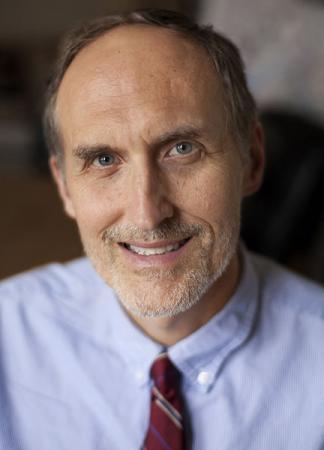
“It is particularly gratifying to see that we are one of the three top-ranked engineering schools among our Ivy League peers, a group that is somewhat distinct from many of the other highly ranked schools,” said Dean Larry Larson. 

For the full list of the overall college rankings, please go to:
http://www.timeshighereducation.co.uk/world-university-rankings/2011-2012/top-400.html

Wednesday, October 19, 2011

Brown Engineer Nathanial Cooper ’12 Finishes Third at AIChE Competition


Students in the Brown chapter of the American Institute of Chemical Engineers (AIChE) traveled to Minneapolis, Minnesota, to attend the national AiChE meeting and compete in a student poster competition.

In the environmental category, Nathanial Cooper ’12 won a third place award. His poster was entitled, “Agricultural Waste Based Bio-Char Sorption Potential”. Last year, Cooper finished second in the poster competition.

Four students represented Brown at this year’s competition, including: Henry Mattingly ’12 (supervisor Robert Hurt), William Trinh ’12 (supervisor Indrek Kulaots), Cooper (supervisor Indrek Kulaots), and Ellison Kandler ’13 (supervisors Steve Greenbaum of the City University of New York and Eric Suuberg).

“As I've attended these student conferences over many years, and I do carefully review most of these posters presented, I must say that this year was even beyond what I have seen before,” said Kulaots. “The competition has gotten more and more competitive every year, and the level of science presented by undergraduates is remarkable.”

Friday, October 14, 2011

Ancient Lamps, Earrings Yield Their Secrets Under Neutron Imaging

“Neutron imaging gives researchers new tools for exploring artifacts and ancient technology”

Brown University School of Engineering Professor Brian Sheldon is the co-principal investigator on an exciting colloborative project that also includes Brown's Joukowsky Institute for Archaeology

For the first time at Oak Ridge National Laboratory (ORNL), neutron images in three dimensions (3-D) have been taken of rare archaeological artifacts. Bronze and brass artifacts excavated at the ancient city of Petra, in present day Jordan, were recently imaged in 3-D using neutrons at the High Flux Isotope Reactor’s CG-1D neutron imaging instrument.

The neutron imaging technique gives eager archeologists and ancient historians significant, and otherwise wholly inaccessible, insight into the manufacturing and lives of cultures that once occupied settlements within the Roman Empire, Middle East, and Colonial-Period New England.  
The samples imaged in 3D in August came from the collections of the Joukowsky Institute for Archaeology and the Ancient World at Brown University. They include an elaborate hanging bronze oil lamp, a large Roman coin, and—most charmingly—a standing dog figure, which might have been either a religious dedication or perhaps a toy. Although their original provenance is unknown, they are all excellent examples of common metal finds from antiquity.
Principal investigator (PI) Krysta Ryzewski, an assistant professor of anthropology at Wayne State University, and her co-PI Brian W. Sheldon, professor of engineering at Brown University, were loaned the artifacts for study from professor Susan E. Alcock, director of Brown’s Joukowsky Institute. 
In earlier work, the team conducted two-dimensional imaging of copper alloy (bronze and brass) artifacts both from Petra and from Greene Farm, a colonial-period plantation in Rhode Island. The samples include artifacts from daily life: a clothing buckle, a knife, and some building hardware.
Photo and neutron radiograph of ancient Greek lamp
Top: photo of ancient Greek lamp. Bottom: neutron radiograph of the same lamp.
One circular object from Petra was so corroded that it was unidentifiable. But when it was imaged with neutrons, underneath was a piece of jewelry, probably an earring. Petra is most famous as a trading center in ancient times, connecting the Mediterranean world with places as far away as India and China. It was the capital of an independent kingdom of the Nabataeans, until the emperor Trajan incorporated it into the Roman Empire in the early second century A.D.
The earlier imaging and analysis resolved some questions of object identity and raised many new ones about the techniques and materials that crafts people in the past used to make these objects. “We can also examine certain objects (such as the knife or the bronze lamp) to look for trace residues of the oil once burned in the lamp or what the knife was used to cut,” says Ryzewski.
“I first learned of the developing neutron imaging instruments at Oak Ridge in my conversations with Hassina Bilheux (lead instrument scientist for CG-1D). At the time I was a postdoctoral fellow in archaeology and engineering at Brown. I attended a neutron imaging workshop at SNS in November 2008, and became the only archaeologist to be part of the VENUS instrument development team. Brian Sheldon at Brown also joined then. We have been collaborating on all of the experiments with Hassina at SNS and HFIR,” she says.
The neutron imaging beam line is a huge step forward for these scholars. “Archaeologists and scientists can obtain relatively little information about the manufacture of archaeomaterials, ancient objects, and the materials from which they are constructed from external surfaces alone,” says Ryzewski. “Very few historical accounts describe the construction of such objects and archaeomaterials, ancient bronzes, or ceramic vessels. The only source of information about how these objects were constructed comes from their material properties and composition.”
Archaeological objects are reviewed as unique cultural resources. Earlier analysis often entailed extracting a sample from such an object, which meant damage and sometimes even wholesale destruction of an artifact so it could be mounted effectively for analysis. Analysts’ necessarily conservative treatment of archaeomaterials left many questions unanswered.
Imaging archaeological objects comprehensively and systematically with neutrons only became possible with the development of the CG-1D prototype beam line. Neutron activation analysis and neutron imaging at Oak Ridge means scholars can now conduct detailed, nondestructive analysis of samples. “There currently exist a vast array of archaeological objects and research questions about ancient and historical technological development that can now be posed,” says Ryzewski. “The CG-1D beam line has offered us an invaluable alternative for performing nondestructive, noninvasive analysis.”
CG-1D data can reveal the raw materials used, the manufacturing techniques, the historical development of alloys and composite materials and the geological origins of ores and clay. On the cultural side, researchers can learn about the activities of ancient people’s daily lives that such objects served.
“Archaeologists can now begin to precisely reconstruct past networks and patterns of resource extraction, trade and exchange, environmental impacts of industrial activities on ancient landscapes, and the transmission of craft production traditions over time,” Ryzewski says. “These are some of the sorts of questions that our current research and experiments are designed to address.“
The 3-D neutron imaging and quantitative analysis occurs at an instrument that is a time-of-flight beam line, with a chopper for producing pulses of neutrons to take noninvasive images. Neutrons, rather than x-rays, do the work.
“Part of our early work was to test the parameters of the instrument and how we might need to adjust the instrumentation to suit the artifacts, which tend to vary in composition, size, and density,” Ryzewski says. 
“We anticipated that we would be able to see beneath the surface and find evidence of manufacturing steps (mold seams), impurities or other organic inclusions in the metals, residue from the objects’ use, and microstructural or compositional elements,” she says.
Their data are still being processed, but preliminary results from the bronze lamp suggest that they will be able to see and examine aspects of all of these areas of interest once the 3-D data are compiled. 
“Our work is still in its early stages. We hope to reexamine these objects in further rounds of testing in 2012. We will expand our sample base to other types of metal artifacts, perhaps some excavated from shipwrecks. We hope to examine ceramic artifacts as well, Ryzewski says.
More broadly, the scholars may be in a position to offer information to scientists who specialize in the conservation and stabilization of museum collections. Other findings may provide insights into materials behavior of interest to materials science. “Each round of experiments raises many more questions about the materials in the object and about the instrumentation itself,” Ryzewski says.
This fall the researchers will return to HFIR to image some of the bronze objects for Bragg-edge peaks in the materials. Collaborating with Ryzewski and Sheldon are Bilheux and Lakeisha Walker of SNS and Susan Herringer, a doctoral student in materials science engineering at Brown and the Joukowsky Institute.
The group will publish their results in both archaeological and neutron sciences academic publications. In addition, they will present their initial findings at the annual Society for American Archaeology meetings in Memphis in April 2012.

Courtesy of Oak Ridge National Laboratory/Written by Agatha Bardoel

Professors Kenny Breuer and Eric Suuberg Named Associate Deans of Engineering


Brown University School of Engineering Dean Larry Larson has announced that Professor Eric Suuberg has agreed to accept an appointment as Associate Dean of Engineering for Research and Graduate Initiatives and Professor Kenny Breuer has agreed to accept an appointment as Associate Dean of Engineering for Academic Programs. Both will serve three-year terms.

“I want to thank them both for their willingness to serve the School of Engineering, and for the commitment of their time and energy in moving the School forward in the coming years. Professors Suuberg and Breuer bring decades of experience and wisdom to the School leadership.” said Larson.

The Associate Dean of Engineering for Research and Graduate Initiatives will be responsible for enhancing and expanding the research and graduate enterprise and profile of the School of Engineering, including development of an enhanced master’s program for the School of Engineering and development of a plan for improved engineering research laboratory and instructional space.

The Associate Dean of Academic Programs will be broadly responsible for the academic mission of the School of Engineering, and will work closely with the Director of Undergraduate Programs, Director of Graduate Programs and the Curriculum Committee on curriculum development, educational outreach, student career development and instructional technology.  

Professor Breuer received his Sc.B. from Brown and his M.Sc. and Ph.D. from M.I.T. He spent nine years on the faculty of M.I.T. in department of Aeronautics and Astronautics, before returning to Brown in 1999. His research interests are in fluid mechanics, covering a wide range of topics, including the physics of flows at micron and nanometer scales, animal flight (bat flight in particular), and the physics and control of turbulent flows. He is author of over one hundred refereed technical publications, has edited and co-authored several books, including “Microscale Diagnostic Techniques”, “A Gallery of Fluid Motion”, and “Multimedia Fluid Mechanics”. Breuer was elected a fellow of the American Physical Society in 2010.

Professor Suuberg has been at Brown since 1981, when he was one of the founding members of Brown's Chemical Engineering program. His research interests have been in the areas of energy and environmental engineering. He has served as Associate Dean of the Faculty (2002-2005), as Chair of the Psychology Department (2004-5) and as a member of the Executive Committee of the Division of Engineering. He is currently Co-Director of the Superfund Basic Research Program, and a co-founder of the Commerce, Organizations and Entrepreneurship concentration as well as a co-founder of the PRIME master’s program. He is a principal editor of the journal Fuel. He was elected fellow of the American Chemical Society (ACS) in 2011.

Professor Suuberg's research interests center on energy and environmental areas, involving study of fuel chemistry (coal, oil shale, biomass), activated carbons (production and properties), materials reuse (automobile tires, coal fly ash), fire safety and, most recently, the characterization and cleanup of lands and sediments contaminated with mixed pollutants with a focus on thermodynamics of mixtures of high molecular weight organic compounds and the related problem of vapor intrusion.

He received his bachelor’s degree in chemical engineering from M.I.T., a master’s degree in management science from M.I.T., and an Sc.D. in chemical engineering from M.I.T.

Thursday, October 6, 2011

Brown Engineering Alumnus Michael Escuti wins Presidential Award for Young Scientists and Engineers


Dr. Michael Escuti ScM '99 PhD '03, who received both his master's degree and Ph.D. in electrical engineering from Brown University and is now a North Carolina State University engineering professor has won the U.S. government's top award for early-career scientists and engineers.

Escuti, associate professor of electrical and computer engineering at NC State, will receive the Presidential Early Career Award for Scientists and Engineers later this fall, the White House announced. The awards program, established by President Bill Clinton in 1996, honors researchers for working at the frontiers of science and technology and serving the community through scientific leadership, public education or outreach.

Winners receive research grants of up to five years to support their work.

Escuti was honored for his pioneering development of liquid crystal "polarization gratings," which consist of a thin layer of liquid crystal material on a glass plate. The White House also recognized him for educating students through collaborations with international academic teams and industries, as well as for outreach work in underserved communities.

Escuti's research has shown how polarization gratings, as well as devices and applications based on them, can solve problems in optics that had been previously thought unsolvable. One result of the work is a very energy-efficient way of steering laser beams that is precise and relatively inexpensive. The research has potential applications in laser radar and free space communication, which uses lasers to transfer data between platforms – such as between satellites or between aircraft and soldiers on the battlefield. Escuti's team, consisting of NC State students along with partner Boulder Nonlinear Systems Inc., has already delivered prototypes of the technology to the U.S. Air Force and is working on other applications.

Another result is a low-loss light switch, which inherently acts on all components of light rather than just the correctly polarized half, meaning that it is very transparent when it is open and very dark when closed. Other results include high-resolution spectral/polarization cameras, which enable compact and low-cost imaging beyond what our eyes can see for platforms such as aerial vehicles, satellites and biomedical imaging.

Escuti is commercializing his research through several industrial partnerships, including his own start-up company, ImagineOptix Corp., that has already prototyped a tiny, highly efficient projection display that could revolutionize displays on hand-held and mobile devices.

His work has resulted in a National Science Foundation (NSF) CAREER Award, three awarded patents and nine pending patents. He has also received $4.3 million in external research funding from NSF, and many other federal, state, and private sources.

After receiving his Ph.D. in electrical engineering from Brown University in 2003, Escuti joined the NC State faculty in 2004.

Portions of this release courtesy of North Carolina State University.

Wednesday, October 5, 2011

Nanoskin Saves Lives and Limbs

Engineers and Orthopedics Experts Reduce Risk of Infection from Medical Prostheses with Nanotech that Mimics Human Skin


Engineers and orthopedics experts are applying nanotechnology to prosthetic medical devices in order to increase patient safety. By closely mimicking human skin, experts hope to reduce the infection-inducing bacteria that grow on prostheses. Changing the texture of the devices in small ways results in a big reduction in bacteria growth, as well as improvement of skin closures and bone growth.

Nanoskin saves lives and limbs - San Diego, California News Station - KFMB Channel 8 - cbs8.com

Losing a limb can be devastating and in the United States there are approximately 1.7 million people living that way. One of the biggest fears for those who use prosthetic devices is getting an infection. But researchers are working on a way to mimic the human skin to cut down on infections.

“I went to bed and woke up the next morning and my body was swollen and I had blisters all over it,” Anthony Buttaro, a man who suffered limb loss, told Ivanhoe.

That morning Anthony Buttaro rushed to the hospital. Doctors diagnosed him with MRSA the often deadly infection forced doctors to amputate his left arm. Now Anthony uses a prosthetic device but he is still concerned about infections.
“I’m always worried about it,” Buttaro said.


To ease those fears engineers and experts in orthopedics at Brown University are applying nanotechnology to medicine called nanomedicine to mimic the tiniest features and contours of human skin.

“Skin serves as a barrier to keep bacteria out of the body,” Thomas Webster an engineer at Brown University told Ivanhoe.

Screws are often used to attach the prosthetic device to bone, but bacteria can grow on the screws causing an infection.
“We are talking really, really small features that are making a difference,” Webster said.

The difference comes by changing the texture of the screw. First it is dipped into hydrofluoric acid. At the same time voltage is applied to create the tissue like features.

“What we are seeing, we’re reducing bacteria growth, on these implants, we’re improving skin closures around the implants and improving bone growth,” Webster explained.

By mimicking the skin researchers believe it will cut down on infections, saving lives and limbs. The nanoskin technology is still in the study phase, but researchers hope to start human testing in the future.


ABOUT NANOTECHNOLOGY: Nanotechnology is science at the size of individual atoms and molecules -- objects and devices measuring mere billionths of a meter, smaller than a red blood cell. At this size scale, materials have different chemical and physical properties than the same materials in bulk, because quantum mechanics is more important. For example, carbon atoms can conduct electricity and are stronger than steel when woven into hollow microscopic threads. Nanoparticles are already widely used in certain commercial consumer products, such as suntan lotions, "age-defying" make-up, and self-cleaning windows that shed dirt when it rains. One company manufactures a nanocrystal wound dressing with built-in antibiotic and anti-inflammatory properties. On the horizon is toothpaste that coats, protects and repairs damaged enamel, as well as self-cleaning shoes that never need polishing. Nanoparticles are also used as additives in building materials to strengthen the walls of any given structure, and to create tough, durable, yet lightweight fabrics.


The Biophysical Society and the Materials Research Society contributed to the information contained in the TV portion of this report.

Monday, October 3, 2011

Heat at the Borders

Brown University School of Engineering professor Vivek Shenoy's work on thermal transport across grain boundaries in graphene (published in Nano Letters last month) has also been featured in the research highlights section of Nature Materials. An abstract of his paper, "Thermal transport across Twin Grain Boundaries in Polycrystalline Graphene from Nonequilibrium Molecular Dynamics Simulations" follows:

Heat at the borders

Fabio Pulizzi
Nature Materials
 
10,
 
724
 
(2011)
Published online
 
Nano Letters http://dx.doi.org/10.1021/nl202118d (2011)

Graphene exhibits the highest thermal conductivity ever observed. Its thermal transport has been studied theoretically and experimentally, mostly in single-crystalline graphene. Unfortunately, large-scale growth, for example by chemical vapour deposition (CVD), usually yields polycrystalline sheets. Akbar Bagri and colleagues have performed molecular dynamic simulations of the thermal transport across various grain boundary orientations in graphene. They assumed a constant heat flow through the material, calculated the temperature profile and from that estimated the thermal conductivity. Interestingly, they found abrupt jumps in the temperature at the grain boundaries, which depend on the boundary orientation and grain size. The estimated grain boundary thermal conductivity is much higher than in the case of other materials with high thermal conductivity, such as nanocrystalline diamond. The results are particularly important in view of potential applications based on CVD-grown graphene. It will be interesting to see how the experiments will compare with these predictions.


For the full html version from NanoLetters, please go to:
http://pubs.acs.org/doi/full/10.1021/nl202118d

Wednesday, September 21, 2011

Brain researchers study high-tech ways to overcome injury

About a year after winning a major share of a nearly $15-million grant, a team of Brown professors is developing and using new technologies to study the brain. Their goal is to inform the development of therapies that could restore functions lost to injury and stroke.

PROVIDENCE, R.I.
 [Brown University] — When six engineering and neuroscience professors took on Brown’s major role in the $14.9-million REPAIR project a little more than a year ago, they also took on a dream. Their goal is to understand the workings of the brain’s circuitry so well that it would be possible to fix a traumatic brain injury.

“The ability to help people who are severely disabled or injured in ways that no current medical treatment can cure is the dream,” said Arto Nurmikko, professor of engineering, who is the co-primary investigator of the project. It’s funded by the Defense Advanced Research Projects Agency, and is shared with Stanford University, the University of California–San Francisco and University College London.


New research to REPAIR the brain

The Brown team, which includes neuroscientists Rebecca Burwell, Barry Connors, John Donoghue, David Sheinberg, and Leigh Hochberg, hopes to ferret out how circuits of brain cells work to perceive the environment, process a physical response to it, and then command the body to act out that plan. For people who’ve suffered brain damage, the scientists’ goal will be to translate knowledge into treatments that can restore impaired functions.

“If there is an injury that leads to some kind of dysfunction in the brain, do we understand enough so as to substitute the missing part or the broken part with some of the kinds of the control technology we are trying to develop and replace that function?” Sheinberg said. “Do we understand how the visual system works well enough so that in the absence of a particular part of the visual system we can deliver signals artificially that might serve as a viable substitute?”

The goal is bold but the team is encouraged by the advent of a new technology called optogenetics. It allows them to genetically engineer brain cell circuits to be controlled with pulses of light. Blue light makes the cells active. Yellow light makes them inactive. The technology, developed by project collaborator Karl Deisseroth at Stanford, therefore allows scientists to control functions within the brain in the millisecond timescale of its natural operation. That technology, coupled with the traditional technique of reading out brain signals electrically, gives the researchers the ability to selectively change how brain cells are working and at the same time observe the response of connected cells.

“The optogenetic methodology is fairly new and it’s promising to revolutionize the experimental tools that we have for exploring how the brain processes information and remaps and reorganizes,” Burwell said. “This will be one way that we can target an individual neuron in order to change its patterns of activity. This would be the way that we write in a signal.”

To make such a read-write interface with the brain feasible, Nurmikko and his lab’s members in the first year have invented a new device they call the “optrode.” The prototype device delivers laser pulses to the brain to control circuits and records the electrical activity of neurons all within a wire comparable in width to a hair.

In experiments with rodents, Connors uses optogenetics to discern how individual cell behavior influences the operation of brain circuits, and Burwell is using optogenetics to study how brain circuits underlying functions such as attention and memory guide decision making and behavior. Sheinberg uses these methods to study visual perception and recognition, and Donoghue and Hochberg study how the brain produces physical movement commands. All together, the work will produce needed new findings in perception, cognition, and movement that can inform new therapies for people who have lost any of those functions to injury.

“There’s an awful lot to be learned,” Nurmikko said. “This paradigm of listening to the brain while actually informing the brain [with] methods that have not been available before, will elevate that understanding to a completely new level.”

By David Orenstein

Tuesday, September 20, 2011

Why carbon nanotubes spell trouble for cells

Carbon nanotubes and other long nanomaterials can spell trouble for cells. The reason: Cells mistake them for spheres and try to engulf them. Once they start, cells cannot reverse course, and complete ingestion never occurs. Researchers at Brown University detail for the first time how cells interact with carbon nanotubes, gold nanowires and asbestos fibers. Results are published in Nature Nanotechnology.

PROVIDENCE, R.I.
[Brown University] — It’s been long known that asbestos spells trouble for human cells. Scientists have seen cells stabbed with spiky, long asbestos fibers, and the image is gory: Part of the fiber is protruding from the cell, like a quivering arrow that’s found its mark.


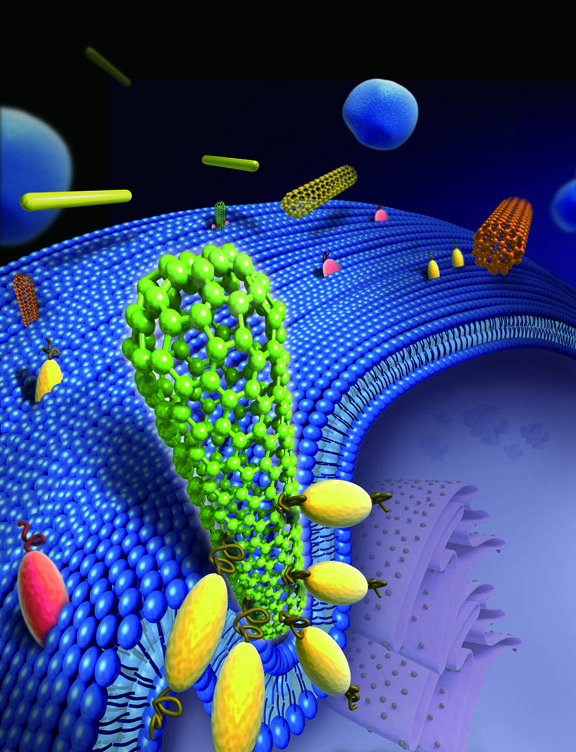
Something perpendicular this way comesCells ingest things by engulfing them. When a long
perpendicular fiber comes near, the cell senses
only its tip, mistakes it for a sphere, and begins
engulfing something too long to handle.
Credit: Gao Lab/Brown University
But scientists had been unable to understand why cells would be interested in asbestos fibers and other materials at the nanoscale that are too long to be fully ingested. Now a group of researchers at Brown University explains what happens. Through molecular simulations and experiments, the team reports in Nature Nanotechnology that certain nanomaterials, such as carbon nanotubes, enter cells tip-first and almost always at a 90-degree angle. The orientation ends up fooling the cell; by taking in the rounded tip first, the cell mistakes the particle for a sphere, rather than a long cylinder. By the time the cell realizes the material is too long to be fully ingested, it’s too late.

“It’s as if we would eat a lollipop that’s longer than us,” said Huajian Gao, professor of engineering at Brown and the paper’s corresponding author. “It would get stuck.”
The research is important because nanomaterials like carbon nanotubes have promise in medicine, such as acting as vehicles to transport drugs to specific cells or to specific locations in the human body. If scientists can fully understand how nanomaterials interact with cells, then they can conceivably design products that help cells rather than harm them.
“If we can fully understand (nanomaterial-cell dynamics), we can make other tubes that can control how cells interact with nanomaterials and not be toxic,” Gao said. “We ultimately want to stop the attraction between the nanotip and the cell.”

Misrecognition
Receptors on the cell’s surface crowd around the nanotube, effectively standing it upright. The cell mistakes the tube for a sphere and begins to engulf it.
 Credit: Gao Lab/Brown University

Like asbestos fibers, commercially available carbon nanotubes and gold nanowires have rounded tips that often range from 10 to 100 nanometers in diameter. Size is important here; the diameter fits well within the cell’s parameters for what it can handle. Brushing up against the nanotube, special proteins called receptors on the cell spring into action, clustering and bending the membrane wall to wrap the cell around the nanotube tip in a sequence that the authors call “tip recognition.” As this occurs, the nanotube is tipped to a 90-degree angle, which reduces the amount of energy needed for the cell to engulf the particle.
Once the engulfing — endocytosis — begins, there is no turning back. Within minutes, the cell senses it can’t fully engulf the nanostructure and essentially dials 911. “At this stage, it’s too late,” Gao said. “It’s in trouble and calls for help, triggering an immune response that can cause repeated inflammation.”
The team hypothesized the interaction using coarse-grained molecular dynamic simulations and capped multiwalled carbon nanotubes. In experiments involving nanotubes and gold nanowires and mouse liver cells and human mesothelial cells, the nanomaterials entered the cells tip-first and at a 90-degree angle about 90 percent of the time, the researchers report.
“We thought the tube was going to lie on the cell membrane to obtain more binding sites. However, our simulations revealed the tube steadily rotating to a high-entry degree, with its tip being fully wrapped,” said Xinghua Shi, first author on the paper who earned his doctorate at Brown and is at the Chinese Academy of Sciences in Beijing. “It is counter-intuitive and is mainly due to the bending energy release as the membrane is wrapping the tube.”
The team would like to study whether nanotubes without rounded tips — or less rigid nanomaterials such as nanoribbons — pose the same dilemma for cells.
“Interestingly, if the rounded tip of a carbon nanotube is cut off (meaning the tube is open and hollow), the tube lies on the cell membrane, instead of entering the cell at a high-degree-angle," Shi said.
Agnes Kane, professor of pathology and laboratory medicine at Brown, is a corresponding author on the paper. Other authors include Annette von dem Bussche from the Department of Pathology and Laboratory Medicine at Brown and Robert Hurt from the Institute for Molecular and Nanoscale Innovation at Brown.
The National Science Foundation, the U.S. Department of Commerce National Institute of Standards and Technology, the National Institute of Environmental Health Sciences Superfund Research Program, and the American Recovery and Reinvestment Act funded the research.
By Richard Lewis

Wednesday, September 14, 2011

Dean Larry Larson featured in Providence Business News


New Brown School of Engineering Dean Larry Larson is profiled by the Providence Business News.
Five Questions With: Larry Larson
COURTESY BROWN UNIVERSITY
         "A GREAT UNIVERSITY thrives on the quality of its faculty, and the best faculty member is a rare combination of a brilliant and ambitious researcher and an engaged and passionate teacher," said Larry Larson, The new dean of Brown University’s School of Engineering.


Lawrence Larson became the inaugural dean of Brown University’s School of Engineering, which was approved to be elevated from a division to a school last year.

Larson, an expert in microelectronics technology and wireless communications, came to Providence from his role as the chair of the Electrical and Computer Engineering Department in the Jacobs School of Engineering at the University of California-San Diego.
Last year, Larson predicted that within a decade wireless devices and sensors will be so inexpensive that they could be embedded into almost any manufactured object and located anywhere thought GPS technology in his presentation “Wireless Everywhere and in Everything.”

PBN: First of all, congratulations on your new role. How do you see your first year going? Do you feel ready for the position? Is this a big leap from your previous roles?


LARSON:
 Thank you! It is great to be here in Providence – after 30 years in southern California, my family and I are looking forward to the beautiful New England fall.

I’m planning to spend a lot of my first year working with everyone at Brown to build momentum for the growth of the School of Engineering. We’re trying to build a world-class research enterprise in Engineering, which builds on our historic strengths in teaching and research, and on our wonderful students.

Becoming a dean is a huge leap for anyone – there are no “dean schools” – but I’m fortunate to have a wonderful staff and amazing faculty here at Brown to help me. So far, the transition has been just great.

PBN: You’ve said that your primary goal is to recruit new faculty in cutting-edge research areas. Who’s on your dream list?


LARSON:
 A great university thrives on the quality of its faculty, and the best faculty member is a rare combination of a brilliant and ambitious researcher and an engaged and passionate teacher. My major goal for the next few years will be to find these special people and convince them that Brown is the place they should spend the rest of their careers. We’ll be recruiting in areas of Engineering that have special interdisciplinary connections to the rest of Brown, and are in emerging areas of key societal needs: health care, the environment, energy and entrepreneurship.

PBN: You’ve also mentioned that you’d like to expand on graduate programs and create “groundbreaking” undergraduate programs. What did you have in mind?


LARSON:
 Most engineers go on to do graduate work at some point in their careers – it’s almost a requirement if you want to do cutting-edge work. One of our goals in the coming years is to expand our offerings of master’s degree programs that are targeted at students who want to take this next step in their careers. At the same time we also intend to expand our Ph.D.-level research, which is a key means for creating the new knowledge and new technologies that create new jobs and benefits all of society.

Life-changing undergraduate education is the heart of Brown University. One of the things I want to expand in the coming years is undergraduate research opportunities. Brown’s undergraduates are just amazing, and I want to make sure that each of them has the opportunity to work in a professor’s lab and have a meaningful research experience.

PBN: How do you plan to lead Brown’s school through the “fundamental transformation” that engineering is undergoing as barriers between traditional disciplines meld? What’s the strategy?


LARSON:
 One of the reasons I was attracted to Brown is its unique collaborative and interdisciplinary culture. This culture is uniquely well suited to the changes that are going on in the world around us, where traditional barriers between disciplines are breaking down, and great new opportunities lie at the boundaries between disciplines. So, we will look for new faculty members who are well suited to thrive in this new world in which we find ourselves. We already have some great examples of faculty here in Engineering who are leading the way. For example, Professor Arto Nurmikko’s work with John Donoghue and the Warren Alpert Medical School on brain interface technologies unites the disciplines of neuroscience, engineering, biology and medicine.

PBN: Where’s the current weak spot at the school that you’d like to fix?


LARSON:
 I’ve been amazed by the broad strengths of the Brown program since I arrived. The engineering program at Brown is the oldest in the Ivy League and the third oldest civilian engineering program in the U.S. So, we have a rich and distinguished history. We’re really focused on making it even better and more visible, by recruiting the best faculty, expanding our educational offerings, and building a modern and expanded space for our ground-breaking research.

Tuesday, September 13, 2011

Bioengineering Professor Leads Research on Head Impacts and Concussions in Football

Researchers, including biomedical engineering Professor Joseph J. "Trey" Crisco,  gathered data on the frequency, direction, and magnitude of head impacts from players who wore sensor-equipped helmets during three football seasons at Brown University, Dartmouth College, and Virginia Tech. The data amount to a measure of players’ exposure to head impacts, which can ultimately help physicians and scientists understand how concussions occur.


PROVIDENCE, R.I. — Thousands of college football players began competing around the nation this week, but with the thrill of the new season comes new data on the risks of taking the field. A new study reports that running backs and quarterbacks suffer the hardest hits to the head, while linemen and linebackers are hit on the head most often. The researchers measured head blows during games and practices over three seasons at Brown University, Dartmouth College, and Virginia Tech.

The study, led by Joseph J. Crisco, professor of orthopaedics in the Warren Alpert Medical School of Brown University and director of the bioengineering laboratory at Rhode Island Hospital, documented 286,636 head blows among 314 players in the 2007-09 seasons. Crisco said the new data on the magnitude, frequency, and location of head blows amounts to a measure of each player’s head impact exposure. Ultimately it can help doctors understand the biomechanics of how blows to the head result in injury.

“This allows us to quantify what the exposure is,” Crisco said. “It is the exposure that we need to build upon, so that we can then start understanding what the relationships are with acute and chronic head injury.”

The study appears online in advance in the Journal of Biomechanics.

Concussions and other head injuries have become a source of elevated concern in football and other sports in recent years, with various leagues revising policies to protect players better. In part based on seeing this new data, said Robin Harris, Ivy League executive director, league officials announced earlier this year that full-contact practices would be limited to two a week.

Hits by position


The new study documents the nature of head blows by player position. Players on the three teams wore helmets equipped with wireless sensors that measured acceleration in various directions. That data allowed the team of researchers from Brown, Dartmouth, Virginia Tech, and sensor-maker Simbex to discern how hard the hit was, how often each player was hit, and where on the helmet they were hit.

Crisco devised the algorithm that Simbex’s Head Impact Telemetry System uses to measure head impacts. The system’s development and this study were funded by the National Institute of Child Health and Human Development and the National Operating Committee on Standards for Athletic Equipment.

The data on head acceleration and hit direction are used to calculate a composite score of exposure called HITsp that researchers believe might be a good predictor of concussion. On average, running backs had the highest HITsp, 36.1, followed by quarterbacks with 34.5 and linebackers at 32.6. Offensive and defensive linemen had the lowest HITsp numbers, with 29.0 and 28.9 respectively, but along with linebackers, they were hit on the head most often. Doctors worry not only about hit severity, but also hit frequency, because repeated head impacts may cause “subconcussive” neurological damage over time.

By analyzing head impacts by position, Crisco said, researchers can help football league officials and equipment designers begin to think about ways to make players safer.

“It will allow us to begin to understand how to control the exposures,” Crisco said. Controlling head impact exposure is critical, he added, because there are currently no treatments for acute or chronic brain injuries, and helmets cannot prevent injuries for all players in all situations.

One possibility could include rule changes. Another could include designing helmets for specific positions.

Crisco and his colleagues are now analyzing data about concussions during the three seasons to determine how and whether head impact exposure is associated with injury. He recently co-authored another paper about male and female collegiate hockey players, which reported that although women were diagnosed with more concussions, they sustained fewer and less severe head impacts.

Although Crisco’s analysis is still underway, his insights into head impact exposure led him and co-author Richard Greenwald, a Dartmouth engineer, to write a commentary earlier this year in Current Sports Medicine Reports, in which they argued that intentional use of the head in sports must be curbed.

“We propose the adoption of rules — or in some sports, we champion the enforcement of existing rules — that eliminate intentional head contact in helmeted sports,” they wrote. “When coupled with education that leads to modified tackling, blocking, or checking techniques, these rules will reduce head impact exposure and have the potential to reduce the incidence and severity of brain injury.”

Crisco, a former college football and lacrosse player, said he is passionate about contact sports and believes they have many benefits.

“Hitting is an essential component,” he said. “But intentional hitting with your head was never part of any sport and is poor technique.”

In addition to Crisco and Greenwald, other authors of the paper are Bethany Wilcox of Brown; Jonathan Beckwith and Jeffrey Chu of Simbex; Stefan Duma and Steve Rowson of Virginia Tech and Wake Forest; and Ann-Christine Duhaime, Arthur Maerlender, and Thomas McAllister of Dartmouth.

By David Orenstein

Monday, September 12, 2011

Brown’s Lei Yang ScM ’11 PhD ’11 Named a Sigma Xi Fresh Face as part of 125th Anniversary Celebration

Brown University engineering alumnus Lei Yang ScM ’11 PhD ’11 has been selected by the 125th Anniversary Planning Committee as a Sigma Xi Fresh Face. Sigma Xi, as part of its anniversary celebration, is recognizing select “students and early-career members who have shown promise in their respective fields of study and dedication to Sigma Xi.”

Yang who was elected to full membership in Sigma Xi in 2011, received the Sigma Xi Outstanding Graduate Student Award at Brown in 2011. At the 2010 Sigma Xi Northeast Regional Research Poster Conference, Dr. Yang won the first place award.
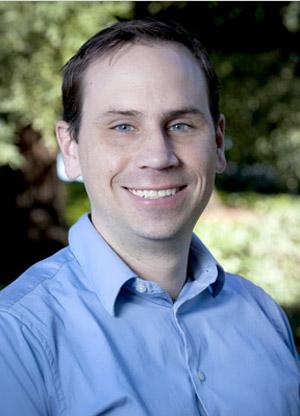
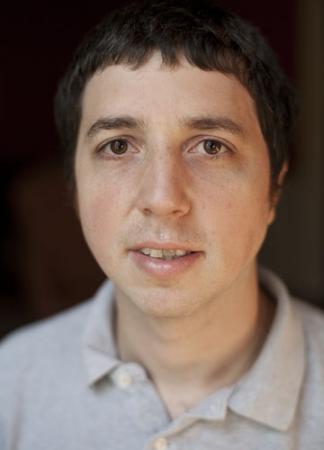
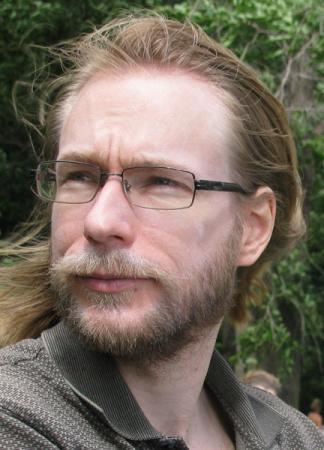
Brian Sheldon, Lei Yang, Thomas Webster

Yang worked with Professors Thomas Webster and Brian Sheldon while obtaining his Ph.D. at Brown. His doctoral dissertation was on “Nanocrystaline Diamond for Orthopedic Implant Coating Applications”. His work was recognized with the outstanding thesis award from the Brown School of Engineering in 2011. He is currently working as a postdoctoral research associate under Sheldon on “Electrical Field Induced Stress Evolution in Anodic Tantalum Oxide Films”.

Yang is already an accomplished researcher with three patents and one pending patent to his credit. He has published more than 15 refereed journal papers, and two book chapters.

He is the founding editor of Nano Bulletin, and has reviewed manuscripts or proposals for 13 research journals. He has given 25 conference presentations and five invited talks.

Friday, September 9, 2011

Meet the Faculty: Andrew Peterson

Someday, the world will run short of the hydrocarbons it currently uses for energy. Andrew Peterson is searching for a way to catalyze the conversion of renewable resources into hydrocarbon-based fuels.

It’s hard to imagine that society would abandon its use of carbon-based energy sources. So the question now is whether society can find a way to derive the benefits of hydrocarbons without exhausting supply. One answer may lie in producing carbon-based fuels from renewable sources.

“With renewable carbon-based fuels, your only choice is biomass,” said Andrew Peterson, who will join the School of Engineering this January as an assistant professor. “It’s great, but it’s limited. We need other options.”

Peterson’s primary research is devoted to figuring out how other renewable energies — sun, wind, maybe nuclear — can be harnessed to deliver the kick that hydrocarbons so easily provide. Scientists have investigated consummating the conversion by using a twin-electrode system that ultimately splits carbon dioxide molecules into hydrocarbons. The trick, however, is overcoming the steep energy threshold needed to pull off the reaction. “That’s the challenge. You need an electrocatalyst,” Peterson said.

Peterson’s approach is to bring advanced math to the problem. “I use quantum mechanics calculations to understand the reactions at those electrodes and then use that theory to design catalysts to make those reactions go better,” he said.

“At the end of the day, it’s about converting chemicals,” he continued, “and the way to do that is by a catalyst. That field has just hit the point in the last few years to design these catalysts from first principles, from quantum mechanics.”

There was no epiphany for the 35-year-old to enter chemical engineering. His father was a superintendent in the Dilworth, Minn., school district where Peterson grew up. His mother taught special-education and math classes in a nearby school district. He considered himself a “science nerd” — not a dynamite story.

After graduating from the University of Minnesota, majoring in chemical engineering, Peterson earned his master and doctorate degrees from the Massachusetts Institute of Technology. As a graduate student, he banded together with a few classmates to form a company, C3 Bioenergy. Working nights and weekends, the young scientists demonstrated that the same feedstock used for ethanol could be transformed into propane through fermentation and treatment by water under high pressure and temperature. The idea got media attention and caught the eyes of investors. The group placed second in MIT’s $100K Business Plan Competition in 2007.

Despite the interest and attention, Peterson decided it wasn’t worth the risk. “It got to the point where we had to choose whether to leave graduate school and leave that path. It was a good choice (not to), I think.”

Even though he decided not to develop his company, Peterson has earned his corporate chops. He worked at the Cabot Corporation in Massachusetts and at British Petroleum and was a research engineer for four years at General Mills, where his innovations led to two patents. (He has three patents pending on separate inventions.)

He said the experience working for companies has helped him appreciate that his research should have a definable application. “Although I’m theoretically based, I don’t want (my research) to be abstract in the real world.”

Peterson moves to Providence with his wife, Alissa, a mechanical engineer who obtained a master’s degree at MIT. He is an avid hiker who has pulled off the Presidential Traverse, which involves summiting peaks named after presidents in the White Mountains in New Hampshire in a day or two.

By Richard Lewis

Meet the Faculty: Pedro Felzenszwalb

Any small child can see that a truck is a truck and a bridge is a bridge. Computers, not so much. Pedro Felzenszwalb is trying to help computers “understand” the digital world they “see.”

Our ability to pick out objects and immediately characterize them is a trait we tend to take for granted. Even toddlers can distinguish a car from other objects in a given scene, such as a bus, a truck, a tree, a house, or a road.

“What seems simple is actually quite complex,” said Pedro Felzenszwalb, incoming associate professor of engineering. “It’s very subconscious. There’s a lot going on, and we don’t understand what the brain is doing, although we realize that there’s a lot that the brain is doing.”

Much of Felzenszwalb’s research is focused on computer vision, a field that uses algorithms and modeling to teach machines how to see. It’s tremendously complex, requiring the bridging of “semantic gaps,” as Felzenszwalb describes them, to enable computers to properly interpret visual cues in order to understand the content of an image.

“A lot of my work is trying to figure out how to build models that can represent interesting things but at the same time are amenable to computation,” Felzenszwalb said.

Back to the car. How can a computer model successfully describe a car? “These models are difficult to come up with, because there’s a lot going on when the image is formed,” Felzenszwalb said. “There are many different types, many different materials (for cars). You take a picture, and you need to factor in how the car looks based on color, the position of the camera relative to the car, other objects in the image, the light reflected, et cetera.”

Computer vision has important applications, including robotics and artificial intelligence, medical image analysis and computer graphics, as well as aiding our understanding of human perception and intelligence.

Felzenszwalb, 34, comes from the University of Chicago, where he was associate professor of computer science. He said that at Brown, he will be part of a computer-engineering group that will include researchers from applied mathematics, computer science, engineering, and possibly other disciplines. “It’s hard to box in,” he said.

Felzenszwalb grew up in Rio de Janeiro. His father is a mathematics professor at the Federal University of Rio de Janeiro, while his mother is a ceramics artist. His interest in computers began to blossom when as a young boy he programmed his own video games and built his own computer from a kit he had ordered. “You had to program it by flipping switches. I really like that kind of stuff,” he said.

He enrolled at Cornell and got involved in the robotics lab. “I’ve always really liked robots. I thought they were cool,” he said.

From there, Felzenszwalb earned his master’s and Ph.D. degrees in computer science at the Massachusetts Institute of Technology. He joined the faculty at Chicago in 2004 and was elevated to associate professor four years later.

He and his wife, Caroline Klivans (whom he met at Cornell), have bought a house on College Hill. The couple plan to get outside as often as they can with their children, Aaron, 4, and Audrey, 1.

By Richard Lewis

Thursday, September 8, 2011

Meet the Faculty: Axel van de Walle

Devising and then testing materials for a given application can consume vast quantities of time and effort. Axel van de Walle uses computers to predict how materials will perform under certain conditions. The limits to technological progress, he says, often lie in the materials.

Axel van de Walle is like a modern-day alchemist. Where old-school scientists, searching for a particular compound, mixed elements and noted the results, van de Walle uses computers and quantum mechanics to predict the end products of interactions.

“The idea is that it takes a lot of manpower and man-hours to do something experimentally,” said the incoming associate professor of engineering. “If you want to try thousands of combinations, you can, but you’ll need lots of research assistants, and it will take a lot of time. But if you can program a computer to do it, suddenly it becomes a lot more feasible (in terms of time and money). You don’t have to pay benefits to a computer.”

Of course, it’s nowhere near that easy. Van de Walle is quick to point out that he and others in the field are building on years of experimental work in phase diagrams, the road map in materials science that involves the mixing of elements. What he brings to the table is applying knowledge of the geometric structure of atoms and the dynamics of those interactions to narrow the focus in the hunt for new, exciting materials.

One of van de Walle’s interests is in refractory materials, which resist high temperatures without melting. Discovering materials that can withstand hotter temperatures has obvious potential applications, from turbine engines to rockets — or any fuel-burning device for that matter.

It’s that societal benefit derived from fundamental research that rings true for van de Walle and led him to materials engineering. “It makes you feel better,” he said. “You don’t want to be in your own bubble.”

The 39-year-old van de Walle grew up in Quebec City. His father was a mining geologist contracted to government and industry, and his mother was a librarian. He described his parents as “scientifically curious,” and said he had always been interested in science. As a child, he was fascinated by physics. “But then I realized, maybe I also like things with concrete applications,” he said. “And then I noticed that materials (science) tends to be a pretty general topic. It seemed like there were open questions that were difficult and useful.”

One such question, he noted, revolves around energy. The efficient harnessing or production of energy is not limited so much by ideas, but by the right materials. “If you think about batteries and fuel cells,” van de Walle said, “the limits lie in the materials. People know how to make a battery or a fuel cell. But to make them work even better, you need improvements in the materials.”

Van de Walle earned his Ph.D. in materials science and engineering at the Massachusetts Institute of Technology. He comes to Brown from the California Institute of Technology, where he was an assistant professor in the Engineering and Applied Science Division. He also comes with substantial grant support. The day he started at Brown, he got official confirmation of the most recent funding, van de Walle happily relayed, thanks to the grant officers at the University who helped write the application before he had stepped on campus.

This fall, he will teach a class on thermodynamics. Beyond teaching and research, van de Walle expects to have little free time, with his second child born less than a month ago.

By Richard Lewis

Wednesday, September 7, 2011

Meet the Faculty: Nitin Padture

Ceramics is an engineering field with limitless possibilities and versatility, Nitin Padture says. Ceramics, for example, can be used as an insulator and as a superconductor.

To some, ceramics is the stuff of art, the ingredient for fashioning vases, figures and other pretty objects. To Nitin Padture, ceramics is an engineer’s putty, a material prized for its conductivity and its resistance to heat.

Padture, incoming professor of engineering, has devoted much of his nearly 30-year career to researching the uses of ceramics. He has come up with several innovations, including a thermal coating to optimize the performance of jet engines and to protect the super-hot turbines in power plants.

“Since I was an undergraduate, I’ve always been interested in ceramics,” said Padture, who was the founding director of the National Science Foundation-funded Center for Emergent Materials at The Ohio State University before coming to Brown. “I sensed there were a lot of possibilities. It’s such a versatile field, and it can have such a wide range of properties, from being an insulator to a superconductor. It always attracted me, and so I followed it.”

Padture, born in India, grew up on the industry floor and often accompanied his father, a civil engineer, to the foundries he managed, where workers manufactured castings for big companies. “I would watch these enormous machines melt this steel, white hot sparks everywhere. I’ve always been fascinated by these materials. It was the highlight of our summer.”

When he wasn’t at the factory, he tinkered at home. Padture had his own workshop, building motors, generators and telephones. As a boy of 10 or 11, he built a telephone using old-fashioned shaving blades stuck vertically into a hollow box, with a pencil lead balanced between the blades to convert the vibrations to an electrical signal that corresponds to sound. “I could speak into it, and you could hear it in the room next door,” he said.

He graduated to bigger things at the Indian Institute of Technology, Bombay, an institution with which Brown established a multifaceted partnership in 2010. There, Padture discovered ceramics after learning that the school did not offer materials science.

He worked with ceramics ever since. In 2007, Padture and colleagues published a paper showing that zirconium dioxide — synthetic diamonds — could be used to coat jet engine turbines blades, which meant the engines could run at higher temperatures and more efficiently. In another paper, he discovered a new class of ceramic coatings that could protect jet engines from volcanic ash, a worry to the airline industry after a volcanic eruption in Iceland grounded European air travel for days last year.

The ceramic coatings also could be used by the power industry, where gas turbines generate 23 percent of the country’s electricity. To operate most efficiently, temperatures need to reach 1,400 degrees Celsius. The ceramic coating prevents the two-story-high gas turbines from melting the metallic components within.

Padture also is investigating graphene, the single-atom thick carbon sheets that are the current darlings of materials science for potential uses in electronics and other fields. He has developed a technique to stamp many graphene sheets onto a substrate at once, in precise locations. The method could usher in high-throughput manufacturing of graphene into computer chips.

“We’re still working on it, but it has the potential to become a viable method for making site-specific graphene sheets,” Padture said. He expects to collaborate with engineering professors Huajian Gao, Robert Hurt, Brian Sheldon, and Vivek Shenoy. “That was a draw — people at Brown who work in areas similar to mine — and I can bring something to the table.”

When not teaching or in his lab, Padture likely will be cruising the countryside on his cherished motorcycle, an Aprilia Futura RST 1000. Chances are neither his wife, Sherilyn, nor his son, Siddharth, an undergraduate at Boston University, will be riding along. “She doesn’t mind me doing this, but she’s not that keen on it,” he said.

By Richard Lewis

Meet the Faculty: Lawrence Larson

Integrated circuits, wireless communications, computer engineering — Larry Larson had a rich research background when he began taking on senior administrative responsibilities at the University of California–San Diego. The chance to be the first dean of Brown’s School of Engineering was an exciting prospect.

Larry Larson comes to Brown University as more than faculty. He comes as the founding dean of the newly created Brown School of Engineering.

Larson started as dean on July 1. After a summer on the job, he has enunciated a vision for the school: Recruit the best faculty; build modern, expanded space for research; in time, move into a new building.
“When really great people come to a place, what are they looking for?” Larson said. “They’re looking for great people to latch onto. They’re looking for space to become world leaders in research. That’s the vision I’m trying to help Brown University realize. I have bought into that.”

In a way, this is the third and final act of a distinguished career for the 53-year-old Larson. For 16 years, he worked at Hughes Research Laboratories. There, he pioneered the development of analog integrated circuits and new generations of low-noise high-electron mobility transistors (HEMTs), as well as microwave integrated circuits in SiGe HBT technology.

In a presentation late last year titled “Wireless Everywhere and in Everything,” Larson predicted that within a decade wireless devices and sensors will be so inexpensive that they can be embedded into almost any manufactured object and located almost anywhere through GPS technology. “It’s not implausible to think that pretty much everything we think about in a cell phone is going to be on something the size of the head of a pin,” he said.

After Hughes, Larson entered academia, joining the faculty at the University of California–San Diego in 1996. From 2001 to 2006, he was director of the UCSD Center for Wireless Communications. During his tenure, the center had an annual budget of approximately $2.5 million that supported 25 faculty members and approximately 45 Ph.D. students, as well as partnering with a dozen companies. He also chaired the Electrical and Computer Engineering Department at UCSD’s Jacobs School of Engineering and was the first faculty member to hold the Communications Industry Chair.

Larson said he was quite comfortable at UCSD, with no plans to move, until he heard about the opening at Brown. It was the chance, he recalled, of leading a major research enterprise at an Ivy League school.

“President Simmons gave me a vision of a really excellent university that wants to grow its science research and engineering, while staying true to its excellence in education and the liberal arts,” Larson said.

He continued, “Now, I’m trying to leverage all the things I learned in research to the administrative side. I’m at the point in my life when I really want to make an impact and especially at a place like Brown.”

Although the majority of his time will be on the administrative side, Larson plans to pursue research into low-power microelectronics for brain interface applications and in health. He’s excited to work with peers such as John Donoghue in neuroscience and Arto Nurmikko in engineering, who are involved in a cutting-edge project to repair damaged signals in the human brain.

The move to the East Coast has other benefits as well. Larson’s daughter attends the Rhode Island School of Design, while his son is enrolled at Oberlin College, in Ohio. An exercise enthusiast, he and his wife are looking forward to exploring the bike and walking trails in Rhode Island.

By Richard Lewis

Thursday, September 1, 2011

Brown School of Engineering to Host Open House for Prospective Students

The Brown University School of Engineering will hold an open house on Saturday, September 24, from 1:00 p.m. – 4:00 p.m. in room 166 of the Barus and Holley building (184 Hope Street / Corner of Hope and George Streets). The faculty of the School of Engineering and the Office of Admissions invite prospective applicants, parents, teachers, and guidance counselors to attend this open house. 

The program will include an overview of the undergraduate programs of study, information about faculty and student research interests, opportunity to meet faculty and undergraduates from the School of Engineering, and a brief overview of admissions and financial aid.

Students are asked to please RSVP online by Monday, September 19. Students may  visit our event website or call (401) 863-7930 for further information.

The Brown undergraduate engineering program enrolls 400 students, and is the oldest in the Ivy League and the third oldest civilian program in the nation.  Students may earn a bachelor of science degree in one of seven ABET accredited programs: biomedical engineering, chemical and biochemical engineering, civil engineering, computer engineering, electrical engineering, materials engineering, or mechanical engineering.  

For any students arriving on campus early, the admissions office offers regularly scheduled information sessions at 10:00 a.m. and 11:00 a.m. and campus tours at 9:00 a.m., 10:00 a.m., and 11:00 a.m. Reservations are not necessary for these sessions. Tours leave from the Stephen Robert ’62 Campus Center located at 75 Waterman Street.