Thursday, September 8, 2011

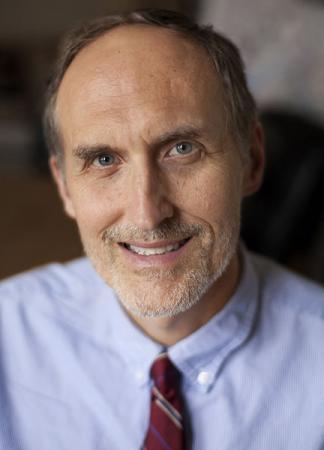
Meet the Faculty: Axel van de Walle

Devising and then testing materials for a given application can consume vast quantities of time and effort. Axel van de Walle uses computers to predict how materials will perform under certain conditions. The limits to technological progress, he says, often lie in the materials.

Axel van de Walle is like a modern-day alchemist. Where old-school scientists, searching for a particular compound, mixed elements and noted the results, van de Walle uses computers and quantum mechanics to predict the end products of interactions.

“The idea is that it takes a lot of manpower and man-hours to do something experimentally,” said the incoming associate professor of engineering. “If you want to try thousands of combinations, you can, but you’ll need lots of research assistants, and it will take a lot of time. But if you can program a computer to do it, suddenly it becomes a lot more feasible (in terms of time and money). You don’t have to pay benefits to a computer.”

Of course, it’s nowhere near that easy. Van de Walle is quick to point out that he and others in the field are building on years of experimental work in phase diagrams, the road map in materials science that involves the mixing of elements. What he brings to the table is applying knowledge of the geometric structure of atoms and the dynamics of those interactions to narrow the focus in the hunt for new, exciting materials.

One of van de Walle’s interests is in refractory materials, which resist high temperatures without melting. Discovering materials that can withstand hotter temperatures has obvious potential applications, from turbine engines to rockets — or any fuel-burning device for that matter.

It’s that societal benefit derived from fundamental research that rings true for van de Walle and led him to materials engineering. “It makes you feel better,” he said. “You don’t want to be in your own bubble.”

The 39-year-old van de Walle grew up in Quebec City. His father was a mining geologist contracted to government and industry, and his mother was a librarian. He described his parents as “scientifically curious,” and said he had always been interested in science. As a child, he was fascinated by physics. “But then I realized, maybe I also like things with concrete applications,” he said. “And then I noticed that materials (science) tends to be a pretty general topic. It seemed like there were open questions that were difficult and useful.”

One such question, he noted, revolves around energy. The efficient harnessing or production of energy is not limited so much by ideas, but by the right materials. “If you think about batteries and fuel cells,” van de Walle said, “the limits lie in the materials. People know how to make a battery or a fuel cell. But to make them work even better, you need improvements in the materials.”

Van de Walle earned his Ph.D. in materials science and engineering at the Massachusetts Institute of Technology. He comes to Brown from the California Institute of Technology, where he was an assistant professor in the Engineering and Applied Science Division. He also comes with substantial grant support. The day he started at Brown, he got official confirmation of the most recent funding, van de Walle happily relayed, thanks to the grant officers at the University who helped write the application before he had stepped on campus.

This fall, he will teach a class on thermodynamics. Beyond teaching and research, van de Walle expects to have little free time, with his second child born less than a month ago.

By Richard Lewis

Wednesday, September 7, 2011

Meet the Faculty: Nitin Padture

Ceramics is an engineering field with limitless possibilities and versatility, Nitin Padture says. Ceramics, for example, can be used as an insulator and as a superconductor.

To some, ceramics is the stuff of art, the ingredient for fashioning vases, figures and other pretty objects. To Nitin Padture, ceramics is an engineer’s putty, a material prized for its conductivity and its resistance to heat.

Padture, incoming professor of engineering, has devoted much of his nearly 30-year career to researching the uses of ceramics. He has come up with several innovations, including a thermal coating to optimize the performance of jet engines and to protect the super-hot turbines in power plants.

“Since I was an undergraduate, I’ve always been interested in ceramics,” said Padture, who was the founding director of the National Science Foundation-funded Center for Emergent Materials at The Ohio State University before coming to Brown. “I sensed there were a lot of possibilities. It’s such a versatile field, and it can have such a wide range of properties, from being an insulator to a superconductor. It always attracted me, and so I followed it.”

Padture, born in India, grew up on the industry floor and often accompanied his father, a civil engineer, to the foundries he managed, where workers manufactured castings for big companies. “I would watch these enormous machines melt this steel, white hot sparks everywhere. I’ve always been fascinated by these materials. It was the highlight of our summer.”

When he wasn’t at the factory, he tinkered at home. Padture had his own workshop, building motors, generators and telephones. As a boy of 10 or 11, he built a telephone using old-fashioned shaving blades stuck vertically into a hollow box, with a pencil lead balanced between the blades to convert the vibrations to an electrical signal that corresponds to sound. “I could speak into it, and you could hear it in the room next door,” he said.

He graduated to bigger things at the Indian Institute of Technology, Bombay, an institution with which Brown established a multifaceted partnership in 2010. There, Padture discovered ceramics after learning that the school did not offer materials science.

He worked with ceramics ever since. In 2007, Padture and colleagues published a paper showing that zirconium dioxide — synthetic diamonds — could be used to coat jet engine turbines blades, which meant the engines could run at higher temperatures and more efficiently. In another paper, he discovered a new class of ceramic coatings that could protect jet engines from volcanic ash, a worry to the airline industry after a volcanic eruption in Iceland grounded European air travel for days last year.

The ceramic coatings also could be used by the power industry, where gas turbines generate 23 percent of the country’s electricity. To operate most efficiently, temperatures need to reach 1,400 degrees Celsius. The ceramic coating prevents the two-story-high gas turbines from melting the metallic components within.

Padture also is investigating graphene, the single-atom thick carbon sheets that are the current darlings of materials science for potential uses in electronics and other fields. He has developed a technique to stamp many graphene sheets onto a substrate at once, in precise locations. The method could usher in high-throughput manufacturing of graphene into computer chips.

“We’re still working on it, but it has the potential to become a viable method for making site-specific graphene sheets,” Padture said. He expects to collaborate with engineering professors Huajian Gao, Robert Hurt, Brian Sheldon, and Vivek Shenoy. “That was a draw — people at Brown who work in areas similar to mine — and I can bring something to the table.”

When not teaching or in his lab, Padture likely will be cruising the countryside on his cherished motorcycle, an Aprilia Futura RST 1000. Chances are neither his wife, Sherilyn, nor his son, Siddharth, an undergraduate at Boston University, will be riding along. “She doesn’t mind me doing this, but she’s not that keen on it,” he said.

By Richard Lewis

Meet the Faculty: Lawrence Larson

Integrated circuits, wireless communications, computer engineering — Larry Larson had a rich research background when he began taking on senior administrative responsibilities at the University of California–San Diego. The chance to be the first dean of Brown’s School of Engineering was an exciting prospect.

Larry Larson comes to Brown University as more than faculty. He comes as the founding dean of the newly created Brown School of Engineering.

Larson started as dean on July 1. After a summer on the job, he has enunciated a vision for the school: Recruit the best faculty; build modern, expanded space for research; in time, move into a new building.
“When really great people come to a place, what are they looking for?” Larson said. “They’re looking for great people to latch onto. They’re looking for space to become world leaders in research. That’s the vision I’m trying to help Brown University realize. I have bought into that.”

In a way, this is the third and final act of a distinguished career for the 53-year-old Larson. For 16 years, he worked at Hughes Research Laboratories. There, he pioneered the development of analog integrated circuits and new generations of low-noise high-electron mobility transistors (HEMTs), as well as microwave integrated circuits in SiGe HBT technology.

In a presentation late last year titled “Wireless Everywhere and in Everything,” Larson predicted that within a decade wireless devices and sensors will be so inexpensive that they can be embedded into almost any manufactured object and located almost anywhere through GPS technology. “It’s not implausible to think that pretty much everything we think about in a cell phone is going to be on something the size of the head of a pin,” he said.

After Hughes, Larson entered academia, joining the faculty at the University of California–San Diego in 1996. From 2001 to 2006, he was director of the UCSD Center for Wireless Communications. During his tenure, the center had an annual budget of approximately $2.5 million that supported 25 faculty members and approximately 45 Ph.D. students, as well as partnering with a dozen companies. He also chaired the Electrical and Computer Engineering Department at UCSD’s Jacobs School of Engineering and was the first faculty member to hold the Communications Industry Chair.

Larson said he was quite comfortable at UCSD, with no plans to move, until he heard about the opening at Brown. It was the chance, he recalled, of leading a major research enterprise at an Ivy League school.

“President Simmons gave me a vision of a really excellent university that wants to grow its science research and engineering, while staying true to its excellence in education and the liberal arts,” Larson said.

He continued, “Now, I’m trying to leverage all the things I learned in research to the administrative side. I’m at the point in my life when I really want to make an impact and especially at a place like Brown.”

Although the majority of his time will be on the administrative side, Larson plans to pursue research into low-power microelectronics for brain interface applications and in health. He’s excited to work with peers such as John Donoghue in neuroscience and Arto Nurmikko in engineering, who are involved in a cutting-edge project to repair damaged signals in the human brain.

The move to the East Coast has other benefits as well. Larson’s daughter attends the Rhode Island School of Design, while his son is enrolled at Oberlin College, in Ohio. An exercise enthusiast, he and his wife are looking forward to exploring the bike and walking trails in Rhode Island.

By Richard Lewis

Thursday, September 1, 2011

Brown School of Engineering to Host Open House for Prospective Students

The Brown University School of Engineering will hold an open house on Saturday, September 24, from 1:00 p.m. – 4:00 p.m. in room 166 of the Barus and Holley building (184 Hope Street / Corner of Hope and George Streets). The faculty of the School of Engineering and the Office of Admissions invite prospective applicants, parents, teachers, and guidance counselors to attend this open house. 

The program will include an overview of the undergraduate programs of study, information about faculty and student research interests, opportunity to meet faculty and undergraduates from the School of Engineering, and a brief overview of admissions and financial aid.

Students are asked to please RSVP online by Monday, September 19. Students may  visit our event website or call (401) 863-7930 for further information.

The Brown undergraduate engineering program enrolls 400 students, and is the oldest in the Ivy League and the third oldest civilian program in the nation.  Students may earn a bachelor of science degree in one of seven ABET accredited programs: biomedical engineering, chemical and biochemical engineering, civil engineering, computer engineering, electrical engineering, materials engineering, or mechanical engineering.  

For any students arriving on campus early, the admissions office offers regularly scheduled information sessions at 10:00 a.m. and 11:00 a.m. and campus tours at 9:00 a.m., 10:00 a.m., and 11:00 a.m. Reservations are not necessary for these sessions. Tours leave from the Stephen Robert ’62 Campus Center located at 75 Waterman Street.

Wednesday, August 31, 2011

Brown/IMNI Part of Consortium Awarded $450,000 to Research Deepwater Horizon Oil Spill in Gulf of Mexico

The Institute for Molecular and Nanoscale Innovation (IMNI) at Brown University is part of a consortium, led by Gulf State partner Tulane University, that has been selected to receive funding as part of the Gulf of Mexico Research Initiative (GRI-BP) program to address future large-scale petroleum spills. The Brown / IMNI sub-award is $450,000 and focuses on particle-based alternatives to chemical dispersants.


Media contact: Dr. Robert Gropp
gripress@aibs.org

Reston, VA – Research on the effects of the Deepwater Horizon oil spill in the Gulf of Mexico took a major step forward today with the Gulf of Mexico Research Initiative (GRI) Research Board’s announcement that eight Research Consortia will be funded for the next three years. A total of $112.5 million over three years will support this portion of the GRI research effort. These teams will investigate the fate of petroleum in the environment, the impacts of the spill, and the development of new tools and technology for responding to future spills and improving mitigation and restoration.

The grant recipients announced today were selected using a competitive merit-review process.

The GRI Research Board is an independent body established by BP to administer the company’s 10-year, $500 million commitment to independent research into the effects of the Deepwater Horizon incident. Through a series of competitive grant programs, the GRI is investigating the impacts of the oil, dispersed oil, and dispersant on the ecosystems of the Gulf of Mexico and the affected coastal States in a broad context of improving fundamental understanding of the dynamics of such events and their environmental stresses and public health implications. The GRI also funds research that improves techniques for detecting oil and gas, spill mitigation, and technologies to characterize and remediate spills. Knowledge accrued will be applied to restoration and to improving the long-term environmental health of the Gulf of Mexico.

“I know the research community has been awaiting this announcement,” said Dr. Rita R. Colwell, Chairman of the GRI Research Board. “The GRI worked aggressively to develop RFP-I to ensure that we stimulate critically important research. The GRI has continued to work relentlessly to receive and review grants in order to make this announcement by the deadline we set last April.”

The grants awarded today were in response to RFP-I, a request for proposals the GRI Research Board issued on April 25, 2011. This request for proposals solicited applications from Research Consortia –
groups of researchers with compatible expertise from four or more institutions – to address one or more of the five intellectual themes established by the GRI Research Board. These themes are: 1) Physical distribution, dispersion, and dilution of petroleum, its constituents, and associated contaminants under the action of physical oceanographic processes, air-sea interactions, and tropical storms; 2) Chemical evolution and biological degradation of the petroleum/dispersant systems and subsequent interaction with coastal, open-ocean, and deep-water ecosystems; 3) Environmental effects of the petroleum/dispersant system on the sea floor, water column, coastal waters, beach sediments, wetlands, marshes, and organisms, and the science of ecosystem recovery; 4) Technology developments for improved responses, mitigation, detection, characterization, and remediation associated with oil spills and gas releases; and 5) Fundamental scientific research integrating results from the other four themes in the context of public health.

“These Consortia establish a research community of great strength with promise of substantial achievement. The results will illuminate the consequences of the Deepwater Horizon explosion and spill, and enable appropriate responses should there be future releases not only in the Gulf of Mexico, but anywhere that oil and gas is produced in ocean environments. They will also assist local, state and federal agencies in their work to remediate the consequences of the oil spill in coastal and marine environments. The long term contribution of this research will be of major benefit to industry, governments, and the people who live along the Gulf of Mexico coast,” said Colwell.

“The GRI received a number of excellent proposals,” said Colwell; “Following a competitive merit review process the Research Board approved funding for eight Research Consortia. These groups will be funded for the next three years and will then be eligible to apply for additional funding.”

The Research Consortia funded are:

Lead Institution: The University of Texas at Austin, Marine Science Institute.
Lead Investigator: Edward J. Buskey, Ph.D.
Project Title: “The Impact of Biological, Physical and Chemical Processes on the Fate of Oil Spills – bridging small scale processes with meso-scale modeling,”
Member Institutions: The Johns Hopkins University, University of Pennsylvania, University of Minnesota, SINTEF Norway, University of Wisconsin-Milwaukee, Research Applied Technology Education Services (Rates)/Coastal Oil Spill Simulation System (COSS)

Lead Institution: Texas A&M University at College Station.
Lead Investigator: Piers Chapman, Ph.D.
Project Title: “Gulf of Mexico Integrated Spill Response Consortium.”
Member Institutions: Massachusetts Institute of Technology, Stanford University, University of California at Berkeley, North Carolina State University, University of Texas at Austin, Woods Hole Oceanographic Institution, University of Hawaii at Manoa, University of Maryland, Georgia Institute of Technology

Lead Institution: Florida State University.
Lead Investigator: Eric Chassignet, Ph.D. Project Title: “Deep-C: Deepsea to Coast Connectivity in the Eastern Gulf of Mexico.”
Member Institutions: Dauphin Island Sea Lab, Florida Institute of Oceanography, Georgia Institute of Technology, Naval Research Laboratory, Norwegian Meteorological Institute, Science Applications
International Corporation, University of South Florida, University of West Florida, University of Miami, Woods Hole Oceanographic Institution

Lead Institution: Louisiana Universities Marine Consortium.
Lead Investigator: Nancy N. Rabalais, Ph.D.
Project Title: “The Effects of the Macondo Oil Spill on Coastal Ecosystems.”
Member Institutions: Brigham Young University, Connecticut College, Florida Gulf Coast University, Louisiana State University Agricultural Center, Louisiana State University, Woods Hole Oceanographic Institution, Rutgers-The State University of New Jersey, University of Louisiana at Lafayette, University of Maryland, University of Tennessee, Virginia Institute of Marine Science

Lead Institution: University of South Florida.
Lead Investigator: Jacqueline Dixon, Ph.D.
Project Title: “Center for Integrated Modeling and Analysis of the Gulf Ecosystem (C-IMAGE).”
Member Institutions: Eckerd College, University of West Florida, Florida Institute of Oceanography, Texas A&M University, Florida State University, University of Miami, Mote Marine Laboratory, North Carolina State University, University of California at Los Angeles, University of California at San Diego, Pennsylvania State University, Leibniz Institute, Hamburg University of Technology, NHL University of Applied Sciences, University of Calgary, Wageningen University

Lead Institution: University of Miami.
Lead Investigator: Tamay Özgökmen, Ph.D.
Project Title: “Consortium for Advanced Research of Hydrocarbon Transport in the Environment (CARTHE).”
Member Institutions: City University of New York, Staten Island, Florida International University, Florida State University, Naval Postgraduate School, Naval Research Laboratory, Nova Southeastern University, Texas A&M University-Corpus Christi, Tulane University, University of Arizona, University of Delaware, University of Texas at Austin

Lead Institution: Tulane University.
Lead Investigator: Vijay T. John, Ph.D.
Project Title: “The Science and Technology of Dispersants as Relevant to Deep Sea Oil Releases.”
Member Institutions: University of South Florida, Carnegie Mellon University, University of Texas at Austin, University of Rhode Island, Princeton University, Auburn University, Louisiana State University, City University of New York, University of Houston, University of Minnesota, University of Buffalo, Arizona State University, University of Massachusetts at Amherst, North Carolina State University, Brown University, University of Michigan, University of Colorado at Boulder, University of Southern Mississippi, University of Maryland, Florida International University, Georgetown University, Princeton University


Lead Institution: University of Mississippi.
Lead Investigator: Raymond Highsmith, Ph.D.
Project Title: “Ecosystem Impacts of Oil and Gas Inputs to the Gulf (ECOGIG).”
Member Institutions: University of Southern Mississippi, University of Georgia, Florida State University, Georgia Institute of Technology, Temple University, Oregon State University, Pennsylvania State
University, Columbia University, University of Maryland, University of North Carolina at Chapel Hill, University of California at Santa Barbara, University of Texas at Austin, J. Craig Venter Institute

This is the second round of funding the GRI has provided this year. On June 30, 2011, the Research Board awarded 17 grants totaling $1.5 million to support the time-sensitive acquisition of critical samples and observations associated with the Deepwater Horizon oil spill on the Gulf of Mexico. Funding for these grants was awarded under the terms of an emergency request for proposals, RFP-III. There will be an additional opportunity for researchers to pursue funding from the GRI. Colwell advised, “The GRI is working to develop and issue another request for proposals, RFP-II, which will award approximately $7.5 million a year in smaller grants to individual or small teams of researchers.”
________________________________
The GRI Research Board members are:
Rita R. Colwell, Ph.D., Research Board Chair
Margaret Leinen, Ph.D., Research Board Vice Chair
Debra S. Benoit, M.Ed.
Peter G. Brewer, Ph.D.
Richard E. Dodge, Ph.D.
John W. Farrington, Ph.D.
Kenneth M. Halanych, Ph.D.
David Halpern, Ph.D.
William T. Hogarth, Ph.D.
Jörg Imberger, Ph.D.
Raymond L. Orbach, Ph.D.
Jürgen Rullkötter, Ph.D.
David R. Shaw, Ph.D.
John Shepherd, Ph.D.
Bob Shipp, Ph.D.
Burton Singer, Ph.D.
Ciro V. Sumaya, M.D., MPHTM
Denis Wiesenburg, Ph.D.
Charles Wilson, Ph.D.
Dana Yoerger, Ph.D.

For more information about the GRI or the Research Board, please visit:
www.griresearchboard.org .

Brown University Biomedical Engineering Program Receives ABET Accreditation

After a complete review, the undergraduate program in biomedical engineering at Brown University has received ABET accreditation.

“This represents a major accomplishment for the Center of Biomedical Engineering, the School of Engineering and the Division of Biology and Medicine,” said Dean Larry Larson.

The external ABET evaluation team examined all aspects of the curricula, student outcomes and feedback from alumni and students.

“This is a well deserved recognition of excellence,” said Edward Wing, Dean of the Warren Alpert Medical School, “and an acknowledgement that Biomedical Engineering brings together faculty from Engineering, BioMed and our affiliated hospitals for an outstanding curriculum.”

The review was led by Professors Anubhav Tripathi and Jeffrey Morgan, co-directors of the Center of Biomedical Engineering with assistance from faculty, staff and students who worked on the preparation of the materials for the review.

“As an Ivy League university competing for today’s brightest students and faculty, Brown biomedical engineering offers an opportunity for scholarship in a burgeoning multidisciplinary context where the synthesis of life sciences and engineering creates new knowledge and real solutions for modern medical care,” said Tripathi. 

Tuesday, August 23, 2011

Nickel nanoparticles may contribute to lung cancer

Lab experiments find that nickel particles with diameters billionths of a meter wide can trigger a cellular pathway that promotes cancer growth.

PROVIDENCE, R.I. [Brown University] — All the excitement about nanotechnology comes down to this: Structures of materials at the scale of billionths of a meter take on unusual properties. Technologists often focus on the happier among these newfound capabilities, but new research by an interdisciplinary team of scientists at Brown University finds that nanoparticles of nickel activate a cellular pathway that contributes to cancer in human lung cells.

When human lung epithelial cells are exposed to equivalent doses of nano-sized (left) or micro-sized (right) metallic nickel particles, activated HIF-1 alpha pathways (stained green) appear mostly with the nanoparticles.
“Nanotechnology has tremendous potential and promise for many applications,” said Agnes Kane, chair of the Department of Pathology and Laboratory Medicine in The Warren Alpert Medical School of Brown University. “But the lesson is that we have to learn to be able to design them more intelligently and, if we recognize the potential hazards, to take adequate precautions.”

Kane is the senior author of the study published in advance online this month in the journal Toxicological Sciences.

Nickel nanoparticles had already been shown to be harmful, but not in terms of cancer. Kane and her team of pathologists, engineers and chemists found evidence that ions on the surface of the particles are released inside human epithelial lung cells to jumpstart a pathway called HIF-1 alpha. Normally the pathway helps trigger genes that support a cell in times of low oxygen supply, a problem called hypoxia, but it is also known to encourage tumor cell growth.

“Nickel exploits this pathway, in that it tricks the cell into thinking there’s hypoxia but it’s really a nickel ion that activates this pathway,” said Kane, whose work is supported by a National Institues of Health Superfund Research Program Grant. “By activating this pathway it may give premalignant tumor cells a head start.”

Size matters

The research team, led by postdoctoral research associate and first author Jodie Pietruska, exposed human lung cells to nanoscale particles of metallic nickel and nickel oxide, and larger microscale particles of metallic nickel. A key finding is that while the smaller particles set off the HIF-1 alpha pathway, the larger metallic nickel particles proved much less problematic.

In other words, getting down to the nanoscale made the metallic nickel particles more harmful and potentially cancer-causing. Kane said the reason might be that for the same amount of metal by mass, nanoscale particles expose much more surface area and that makes them much more chemically reactive than microscale particles.

Another important result from the work is data showing a big difference in how nickel nanoparticles and nickel oxide nanoparticles react with cells, Pietruska said. The nickel oxide particles are so lethal that the cells exposed to them died quickly, leaving no opportunity for cancer to develop. Metallic nickel particles, on the other hand, were less likely to kill the cells. That could allow the hypoxia pathway to lead to the cell becoming cancerous.

“What is concerning is the metallic nickel nanoparticles caused sustained activation but they were less cytotoxic,” Pietruska said. “Obviously a dead cell can’t be transformed.”

Although Kane said the findings should raise clear concerns about handling nickel nanoparticles, for instance to prevent airborne exposure to them in manufacturing, they are not all that’s needed to cause cancer. Cancer typically depends on a number of unfortunate changes, Kane said. Also, she said, the study looked at the short-term effects of nickel nanoparticle exposure in cells in a lab, rather than over the long term in a whole organism.

Still, in her lab Kane employs significant safeguards to keep researchers safe.

“We handle all these materials under biosafety level 2 containment conditions,” she said. “I don’t want anyone exposed. We’re handling them as though they were an airborne carcinogen.”

In addition to Kane and Pietruska, other authors on the paper are Ashley Smith, Kevin McNeil, and Anatoly Zhitkovich, a toxicologist; chemist Xinyuan Liu; and engineer Robert Hurt. Kane, Hurt, and Zhitkovich are associated with Brown’s Institute for Molecular and Nanoscale Innovation.

Friday, August 19, 2011

Thomas Powers named Director of Graduate Programs for School of Engineering


Professor Thomas Powers has been named the director of graduate programs at the School of Engineering at Brown University for the 2011-12 academic year.

“Professor Powers was recommended and nominated by several of his colleagues, and I want to thank him for his service to the School of Engineering in filling this vital role,” said Larry Larson, Dean of the School of Engineering.

Professor Powers received an S.B. in physics and an S.B. in mathematics from the Massachusetts Insitute of Technology in 1989. In 1995, he received his Ph.D. in physics from the University of Pennsylvania. After Penn, he held postdoctoral positions in the physics departments of Princeton University and the University of Arizona. Then, he was a postdoctoral fellow at Harvard University. He joined the Division of Engineering of Brown University in 2000 as the first holder of the James R. Rice Term Chair in Solid Mechanics.

Professor Powers' research interests include molecular and cellular biomechanics, the physics of soft matter, and nonlinear dynamics. He is currently an associate editor of Reviews of Modern Physics.

Thursday, August 18, 2011

Karen Haberstroh named Director of Undergraduate Programs for School of Engineering


Professor Karen Haberstroh has been named the director of undergraduate programs at the School of Engineering at Brown University for the 2011-12 academic year.

“As a former undergraduate engineer at Brown and a professor who has excelled at teaching the introductory Engin 3 course to first semester freshmen, Karen is well-suited to this important role,” said Larry Larson, Dean of the School of Engineering.

Haberstroh is the Director of STEM Outreach and an Assistant Professor of Research (Engineering) at Brown. Prior to joining the University, she served as an assistant professor in the Weldon School of Biomedical Engineering at Purdue University.

Her degrees are in biomedical engineering from Brown University (Sc.B., 1995) and Rensselaer Polytechnic Institute (M.S., 1996; Ph.D., 2000). Prof. Haberstroh's research addresses the use of novel nano-structured polymeric materials in soft tissue engineering applications.

In addition to her research accomplishments, Dr. Haberstroh is dedicated to engineering and science education, and especially focuses on novel methods of education geared towards increasing the percentages of females and minorities in various physical science fields. Finally, she has worked to build connections between the Providence Public School system and Brown University, so that students in the rising generation might consider futures in science.

Tuesday, August 16, 2011

Brown Professor Thomas Webster receives Patent for “Nanofibers as a Neural Biomaterial”

Dr. Thomas Webster, associate professor at the Brown University School of Engineering, has received a patent for "Nanofibers as a Neural Biomaterial," U.S. Patent Number: 7,993,412. Professor Webster has now been awarded 11 full patents plus four provisional patents in his 11 years in academics (five years at Brown and six years at Purdue).

The technology in this patent describes the use of carbon nanotubes/nanofibers to heal a wide range of neurological disorders, from stroke to Parkinson's disease. In this technology, carbon nanotubes and nanofibers, which are tubes and fibers formed from the helical arrangement of carbon, were shown to significantly promote the function of neurons while inhibiting glial scar tissue formation to reverse brain damage. In particular, the unique high conductivity coupled with high strength to low weight ratios of carbon nanotubes were helpful for stimulating functions of nuerons. Carbon nanotubes have even been shown to improve stem cell differentiation into neurons in animal experiments. Currently, this technology is licensed to Nanovis, Inc. (www.nanovis.com)

Webster received his bachelor of science degree in chemical engineering from the University of Pittsburgh, and his master’s degree and and Ph.D. in biomedical engineering from Rensselaer Polytechnic Institute. Professor Webster directs the Nanomedicine Laboratory which designs, synthesizes, and evaluates nanophase materials for various implant applications. Nanophase materials are central to the field of nanotechnology and are materials with one dimension less than 100 nm. Materials investigates to date include nanophase ceramics, metals, polymers, carbon fibers, and composites. Organ systems evaluated to date include orthopedic, cartilage, vascular, bladder, and the central and peripheral nervous systems.

His lab group has generated four books, 33 book chapters, 85 invited prestentations (including tutorials), 215 literature articles and/or conference proceeding, and 245 conference presentations. His technology has resulted in one start-up company. He is the founding editor-in-chief of the International Journal of Nanomedicine and is on the editorial board of ten other journals. He has organized over 25 symposia at academic conferences. Dr. Webster was the 2002 recipient of the Biomedical Engineering Society Rita Schaffer Young Investigator Award, the 2004 recipient of the Outstanding Young Investigator Award for the Schools of Engineering at Purdue University, the 2004 finalist for the Young Investigator Award of the American Society for Nanomedicine, and the 2005 recipient of the Wallance Coulter Foundation Early Career Award.

Thursday, August 11, 2011

Brown Researchers Honored for simulation video


A scientific simulation video created by a group of Brown researchers, including Professor Emeritus Bruce Caswell from the School of Engineering, is among those honored by the U.S. Department of Energy during its annual program called SciDAC, or Scientific Discovery through Advanced Computing. The simulation was created to explore microscopic interactions between healthy blood cells and sickly ones. A second simulation in the video captures how blood-clotting platelets cram into a potentially lethal aneurysm, a weakened cell wall that bulges outward.

Tuesday, August 9, 2011

Professor Eric Suuberg Named a Fellow of the American Chemical Society


Brown University Professor of Engineering Eric Suuberg is the first faculty member at Brown to become a fellow of the American Chemical Society (ACS). The society announced its 2011 class of fellows on Aug. 8. Suuberg, associate director of the Superfund Research Program and co-director of the Program in Innovation Management and Entrepreneurship (PRIME), said the recognition is an unexpected surprise and honor: “I am quite proud to join a distinguished group of individuals who have made significant contributions in the chemical sciences.”  Suuberg joins 212 scientists who have demonstrated outstanding accomplishments in chemistry and made important contributions to ACS, the world’s largest scientific society. The 2011 fellows will be recognized Aug. 29 during the society’s national meeting in Denver. This is not Suuberg’s first honor from the ACS. The society awarded him the H.H. Storch Award for Fuels Chemistry Research in 1999.

Professor Suuberg has been at Brown since 1981, when he was one of the founding members of Brown's Chemical Engineering program. His research interests have been in the areas of energy and environmental engineering. He has served as Associate Dean of the Faculty (2002-2005), as Chair of the Psychology Department (2004-5) and as a member of the Executive Committee of the Division of Engineering. He is currently Co-Director of the Superfund Basic Research Program, and a co-founder of the Commerce, Organizations and Entrepreneurship concentration as well as a co-founder of the PRIME master’s program. He is a principal editor of the journal Fuel.

Professor Suuberg's research interests center on
 energy and environmental areas, involving study of fuel chemistry (coal, oil shale, biomass), activated carbons (production and properties), materials reuse (automobile tires, coal fly ash), fire safety and, most recently, the characterization and cleanup of lands and sediments contaminated with mixed pollutants with a focus on thermodynamics of mixtures of high molecular weight organic compounds and the related problem of vapor intrusion.

He received his bachelor’s degree in chemical engineering from M.I.T., a master’s degree in management science from M.I.T., and an Sc.D. in chemical engineering from M.I.T.


Friday, July 22, 2011

Engineering Professor Janet Blume Named Associate Dean of the Faculty

Brown University Dean of the Faculty Kevin McLaughlin has announced that Associate Professor of Engineering Janet Blume has been appointed as associate dean of the faculty for the academic year 2011-12.
“I wanted to congratulate Janet Blume for this wonderful appointment, which is a well deserved recognition of her many contributions to Brown throughout her career,” said Larry Larson, Dean of the School of Engineering. “It is great to know that her remarkable effectiveness and enthusiasm will be assisting the Dean of Faculty in the coming year.”
Blume, whose research is in mathematical aspects of the mechanics of solids, has been on the faculty at Brown since 1986. She teaches courses at all levels in engineering, including the introductory first-year course, and has served as director of undergraduate programs in the School of Engineering. 
 Blume's contributions have been recognized with the Philip J. Bray medal for Excellence in Teaching in the Physical Sciences (1997), the Tau Beta Pi School of Engineering Dedicated
Faculty Member Award (2009), and the Karen T. Romer Prize for Excellence in Advising (2011). 
Blume graduated magna cum laude with a bachelor of science degree in engineering from Princeton (1982), and holds a Ph.D. in applied mechanics from Caltech (1986). She will begin her work in the Office of the Dean of the Faculty effective August 1.

Thursday, July 21, 2011

Brown Alumna Builds Miniscule Medical Implants to Treat Diseases

Brown engineering alumna and UCSF bioengineer Tejal Desai builds medical implants – with parts as tiny as human cells – that may be used to treat diabetes, kidney failure and other diseases.

As a Santa Barbara high school student, Tejal Desai got a kick out of making things work. Her father was a chemical engineer, and she thought she knew what engineering was all about.


So, she was startled when a bioengineer visited her class and told the students about research to develop artificial organs and implants.

“I was very excited. I had always thought that engineering was about building bridges and mechanical devices. I didn’t know you could use it to help people.”

The class visit was part of a national program to encourage girls to pursue engineering careers. The revelation about artificial organs started Desai on two paths. She not only became a bioengineer, but also an outspoken advocate for young women entering science and engineering fields.

“Because I was so influenced by that program myself, I’ve always had an interest in mentoring girls of various backgrounds who are interested in science and engineering careers," she said. "I hope that if you can encourage them and make them enthusiastic, it will help them continue. It’s something I believe in.”

As a bioengineering undergraduate at Brown University, Desai (Class of '94) also studied sociology and political science, and after college, she played an active – even activist – role in urging her alma mater to assure that female students and faculty had full opportunity to pursue the sciences and engineering. She ended up writing a 100-page document outlining admission policy changes that would encourage more student and faculty diversity in these fields.

Her other path has led her to develop new ways to make implantable medical devices so small that their individual parts are the size of human cells. Such minuscule implants can overcome the limitations of conventional therapy to treat diabetes, kidney failure and other debilitating diseases.

The new tiny-focused technology ironically goes by a very long name: biomedical micro-electro-mechanical systems (bio MEMS). "Micro" refers to sizes that are thousandths of a millimeter, the size of a human cell. The technology now increasingly focuses on still smaller, "nano" scales – millionths of a millimeter.

Desai directs the Laboratory of Therapeutic and Micro and Nanotechnology at UCSF. Her lab has gained national attention for devising and demonstrating the feasibility of an implantable artificial pancreas to treat type 1 diabetes. People with type 1 diabetes cannot maintain healthy blood sugar levels because their immune systems attack and destroy their precious insulin-producing “beta cells” in the pancreas.

Even with frequent self-monitoring and injections of insulin, the blood sugar levels of those with type 1 diabetes spike and plummet, degrading the body’s crucial ability to regulate many metabolic functions. Though self-treatment is fairly effective in the short-run, type 1 diabetes, if left untreated, can ultimately lead to cardiac complications, poor circulation that threatens limbs, and generally, a shorter life span.

Desai conceived of a kind of micro/nano-scale cage, to protect beta cells in the body. The cage, or biocapsule, contains “nanopores” large enough to allow the vital beta cells to secrete insulin, but small enough to prevent the immune system’s molecular soldiers from entering and destroying the beta cells. The device could be implanted near the abdominal wall, or anywhere in the body where the cells are exposed to the body’s sugar levels.

Unlike self-administered insulin shots, an implantable device maintains and protects the body’s natural insulin control and allows normal regulation of the body’s metabolism. It is a cure.

The micro-parts are made of materials accepted by they body’s immune system, and are fabricated using the techniques developed by California’s microelectronics industry. Desai’s lab has already demonstrated in animals that the artificial pancreas device works as intended.

She expects that this technology could be of use for many other chronic, cell-based diseases, such as Parkinson’s, Alzheimer’s, hormone deficiencies – anywhere the body is unable to produce something it needs naturally, she said.

Desai earned her doctorate in the UC Berkeley and UCSF Graduate Program in Bioengineering – a collaboration between the two UC campuses that draws on Berkeley’s nationally recognized engineering expertise and UCSF’s equally recognized clinical research and treatment programs.

“We’ve always felt that we could be better together than either of us apart, and now it’s one of the highest ranked programs in bioengineering in the country,” she said.

Desai is an active member in two other productive collaborations – UCSF’s bioengineering and therapeutic sciences department, and the California Institute for Quantitative Biosciences, or QB3, which links UC Berkeley, UCSF and UC Santa Cruz scientists with counterparts in the biomedical and biotech industries. The network meets one of Desai’s major goals: Speeding the advance of university discoveries into clinical trials and the real world of patient care.

“The goal of all of this is to help people,” she says.

(See more about Desai’s research and UCSF’s “What’s Next in Science” series.)

Teaming with industry

Desai’s insulin delivery research is only one of several potential therapies her team is working on. Some projects receive partial funding from companies eager to translate life-saving innovations into treatments and products. One promising effort aims to deliver drugs directly to the intestines to treat disorders such as colitis and irritable bowel syndrome.

Desai’s team is creating a kind of microscopic “band aid” so small that hundreds of them can be placed in a normal-sized pill. Each strip is as wide as a human hair. Once ingested, these strips will travel to the small intestine, stick to the intestinal wall and deliver medicine. They contain nano-scale drug reservoirs, as well as projections that create a textured surface that can stick to the body’s cells.

Because of the extraordinarily small scale, the projections mechanically interact with intestinal wall cells, and deliver drugs into openings between the cells. There they remain for at least several hours, providing much-needed medication before they are sloughed off.

Desai’s lab is supported in this research by a company called Zcube srl through a sponsored research agreement aimed to help speed such novel treatments into medical practice. Such collaborations are central to QB3, one of four such institutes throughout the UC system, founded 10 years ago to foster research alliances among different UC campuses and with industry.

Some of Desai’s former students have launched a startup company called Nano Precision Medical that is developing devices such as an implantable drug-delivery pump to treat hepatitis C and other chronic diseases. (See video.) The company is starting its life in the QB3 “garage” on the Berkeley campus. It is one of two QB3 startup incubators – the other is at UCSF’s Mission Bay campus – to support the very early stages of promising new biomedical and biotech innovations.

by  Wallace Ravven

Photo by Elisabeth Fall

Wednesday, July 20, 2011

Four Brown Women Engineering Undergrads Coordinate Free Camp for High School Girls

Amanda Kautz ’12, Natalie Serrino ’12, Farzanah Ausaluth ’14, and Lizzie Costa ’14, are spending their summer helping inspire future female engineers. The four women, all undergraduate engineering concentrators at Brown are all coordinators for Spira, a free, four week summer camp for rising tenth grade girls interested in engineering. It is run through Brown University and taught by these four women. Associate professor and director of undergraduate programs Janet Blume has been the advisor to the group.

Kautz is a civil engineering concentrator from Los Angeles, while Serrino is a computer engineering concentrator from Chicago. The rising sophomore Ausaluth also plans to concentrate in civil engineering and is from London, while Costa grew up in East Providence, R.I., and will study biomedical engineering.

Spira Engineering Camp aims to inspire the next generation of female engineers by providing a community in which young women with similar interests can be exposed to math, science, and technology in a hands-on, team-based environment. They are able to learn the real world applications of engineering and how they can make a difference in a typically male-dominated field. The goal is for Spira participants to gain confidence in their abilities and to be motivated to pursue math and science in their future studies and careers.

The 18 tenth grade girls, who attend eight different public and private high schools in the greater Providence area, have been able to
learn about math and science while completing fun, hands-on, team-based engineering design projects. The camp runs from July 5-29 at Brown.

One of the recent projects the teams worked on was a balsa wood bridge project. In this case, teams of two or three girls applied their recently acquired knowledge of buckling, arches, triangles, trusses, and bridge design to create a bridge made of balsa wood. The bridge is then weighed and tested for strength by attaching a bucket to the bridge and filling the bucket of sand until the point of failure. The winning bridge is the one with the greatest strength to weight ratio.

Kautz and Serrino had the initial vision for Spira. They were inspired to create the program based on the success and logistics of the Artemis Project, a
free, five-week summer day camp for rising ninth grade girls in the Providence area who are interested in learning about computer science and technology run by Brown’s computer science department. Artemis has been running at Brown since 1996.

Kautz and Serrino applied for and received funding for Spira from
the National Science Foundation (NSF) through Brown’s Materials Research Science and Engineering Center (MRSEC). The camp is free for the students and lunch is provided. For those students who need transportation, RIPTA bus passes are provided.

Ausaluth and Costa were recruited as coordinators in the fall and since that time all four have shared equal responsibility in planning and running the camp.

Tuesday, July 12, 2011

Brown Engineering Graduate Student Wins NASA Jenkins Fellowship

Eduardo Almeida ScM’10, a Ph.D. student in electrical engineering at Brown University, has been selected to receive a 2011 NASA Harriett G. Jenkins Pre-doctoral Fellowship Project (JPFP) award. The JPFP is sponsored by the National Aeronautics and Space Administration (NASA), and administered by the UNCF Special Programs Corporation (UNCFSP).

As a NASA JPFP fellow, Almeida will receive up to three years of stipend and tuition offset support as he pursues his graduate education. Ph.D. level fellows receive annual stipends of $24,000.

He has been assigned to the Jet Propulsion Laboratory (JPL) and his tenure will begin on September 1, 2011, under the supervision of his NASA mentor, Curtis Padgett. Almeida will also be required to spend 10 weeks each summer working with Padgett at JPL during the fellowship.

Almeida is currently pursuing a Ph.D. degree in the School of Engineering at Brown University under the supervision of Professor David Cooper. During the course of his graduate studies, he received a dual master of science degree in engineering and applied mathematics in 2010. His interests are computer vision, machine learning and pattern recognition. His research at Brown involves 3D surface reconstruction, probabilistic 3D scene understanding and automatic change detection from arbitrary viewpoints and under arbitrary illumination.

In addition, Almeida worked in collaboration with NASA through summer internships at the Jet Propulsion Laboratory in Pasadena, California, in 2009 and 2010. The center develops and manages spacecrafts for interplanetary exploration, such as the Mars Rovers. At NASA/JPL, the group Almeida worked on conducts research and development of algorithms for automatic data interpretation from a variety of imaging sensors. Almeida worked on two projects: i) developing an automated 3D terrain generation process from aerial images (summer 2009); ii) performing refinement of zoom lens camera calibration with unknown and time varying internal camera parameters (summer 2010). The summer internships efforts resulted in a software award and a certificate of recognition from NASA Inventions and Contributions Board.

In addition to his NASA Jenkins Fellowship (JPFP 2011), Almeida was a NASA Rhode Island Space Grant Fellow (RISG 2009-10), and is a member of the IEEE.  The RISG fellowship was a key element supporting the pursuit of his goals of combining engineering and applied mathematics skills in solving real-world problems through JPL. As a RISG fellow and JPL intern, Almeida had the opportunity to network with NASA scientists and to develop tools that helped the engineers on proposed missions. Furthermore, he has shared his experiences with local RI elementary and middle schools through community outreach motivating young scientists to also pursue their dreams.

Before coming to Brown, Almeida graduated magna cum laude from Federal University of Ceara (Brazil) in 2004 with bachelor of science degree in electrical engineering and was a master’s student at Federal University of Santa Catarina (Brazil) where he took several graduate level courses with focus on signal processing. At that time, Almeida’s studies were sponsored by the Brazilian National Research Council, CNPq.