Friday, February 4, 2011

STAC Awards Brown Engineers Funding for Collaborative Projects


The Rhode Island Science and Technology Advisory Council (STAC) announced the awardees of the 2011 Collaborative Research Grant program. The awards will support eight projects representing the efforts of 23 scientists from 13 educational institutions, hospitals and private companies throughout Rhode Island. The Brown School of Engineering had scientists on two of the eight projects. Those projects will receive nearly $400,000 of the $1,435,822 that was awarded.  
Since the program's inception in 2007, STAC has awarded approximately $6.5 million to 38 teams of 97 researchers from 35 organizations -- and the program is returning dividends on this state investment. To date, STAC grant recipients have reported nearly $10 million in follow-on funding from federal and private sources. This outside investment has supported additional research efforts, new patents, new equipment and products and the formation of new companies.

Professors Christian Franck, Janet Blume, and Trey Crisco are working on concussion and traumatic brain injury and collaborating with Cheryl Liu, and Subham Sett from Simulia. They hope to work with companies in designing safer and improved protective gear and to aid the medical community in producing improved quantitative traumatic brain injury (TBI) diagnosis and assessment tools. They were awarded $194,809. 
Professor Bob Hurt and Love Sarin ScM'05 PhD'10 of Banyan Environmental will work to develop new technologies for reducing human health risks associated with anthropogenic mercury emissions from coal-fired power plants and cement kilns. They were awarded $200,000.
The 2011 award recipients include academic and industry scientists pursuing research in disease prevention, mercury emission control, neurology and engineering and demonstrate the vitality and promise of the state's health, science, marine and technology sectors. Priority was given to high-impact projects that are collaborative across Rhode Island institutions, well positioned to receive follow-on funding, and aligned with the Rhode Island Science and Technology Plan.

More about the 2011 Collaborative Research Grant Awardees:

Project 1: Development of multi-scale brain injury models for concussion and traumatic brain injury

This team is working to aid companies in designing safer and improved protective gear and to aid the medical community in producing improved quantitative traumatic brain injury (TBI) diagnosis and assessment tools.
Collaborators:
Christian Franck, Ph.D., Brown University
Janet Blume, Ph.D., Rhode Island Hospital
Joseph J. Crisco, Ph.D., Warren Alpert Medical School and Rhode Island Hospital
Cheryl Liu, Ph.D., Simulia
Subham Sett, Simulia

Project 2: Marine biofouling on high-performance molded materials

Researchers will use microscopic and molecular techniques to characterize the development of marine biofilms. By collaborating with a research university, Ametek SCP will be able to evaluate novel coatings and to expand its markets.
Collaborators:
Lucie Maranda, Ph.D., University of Rhode Island
Keunhan Park, Ph.D., University of Rhode Island
William Mildon, Ametek SCP

Project 3: A novel efficient technology for mercury emission control application

This team will work to develop new technologies for reducing human health risks associated with anthropogenic mercury emissions from coal-fired power plants and cement kilns.
Collaborators:
Robert Hurt, Ph.D.,Brown University
Love Saran, Ph.D., Banyan Environmental Inc.

Project 4: A wound healing product for diabetic ulcers containing choroid plexus growth factors

Researchers will collaborate on development of a topical regenerative product for wound healing and will work to expand and strengthen preclinical research studies on the topic.
Collaborators:
Kim Boekelheide, MD/Ph.D.,Brown University
Moses Goddard, MD, CytoSolve
Chris Thanos, Ph.D., CytoSolve

Project 5: Antigenic targets of Candida albicans specific antibody fragments

The grant will support work to identify the molecular structure on the surface of the fungus Candida albican that are recognized by previously discovered antibodies to stop infection. This collaboration will support infrastructure at Bryant University, preliminary research for future federal grant dollars, and collaboration between universities.
Collaborators:
Joseph Bliss, MD/Ph.D., Women & Infants Hospital
Christopher Reid, Ph.D, Bryant University

Project 6: The inner-space classroom - Innovation for research and education in the ocean state

This group will develop software to provide access to marine science data and information through the University of Rhode Island's Inner Space Center. The grant will provide for increased marine science educational opportunities and enabling of research and education projects for federal funding.
Collaborators:
Dwight Coleman, Ph.D.,University of Rhode Island
Sara Hickox, University of Rhode Island
James Ferguson, RITE-Solutions

Project 7: Tick bite patch: Proof of concept for a first generation immunoinformatics derived anti-tick vaccine with transdermal delivery

This group will work to establish proof-of-principal for a catalytic approach to accelerate bench-to-clinic translation of a novel anti-tick vaccine for humans.
Collaborators:
Thomas Mather, Ph.D., University of Rhode Island
Keykavous Parang, Ph.D., University of Rhode Island
Anne DeGroot, MD, EpiVax, Inc.
William Martin, EpiVax, Inc.
Michael Jordan, Isis Biopolymers, Inc.
Leonard Moise, Ph.D., University of Rhode Island

Project 8: Tracing business-critical web applications

Researchers will develop techniques for comprehensive measurement of the performance of rich web applications by applying causal tracing techniques to both the server and client. This effort will combine the strengths of a university research setting with real client data.
Collaborators:
Rodrigo Fonesca, Ph.D., Brown University
Chris Erway, Ph.D., Tracelytics Inc.


Brown partner ranks No. 8 on FT’s global MBA ranking

PROVIDENCE – IE Business School in Madrid, Spain, which has partnered with Brown University to launch the Executive MBA program, ranked No. 8 on the Financial Times’ 2011 Global MBA rankings.

IE dropped 2 places from its No. 6 spot which it held for 2010 and 2009.

London Business School and the University of Pennsylvania: Wharton tied for first place among the 100 business schools ranked by FT. Harvard Business School came in at No. 3, and Insead and Stanford University GSB split the honor for fourth place.

The FT ranking is based on 21 categories looking at both the institution and its alumni, including data on alumni salaries, the international outreach of each school, and the percentage of women faculty and students.

At IE, the weighted average alumni salary, with adjustments for industry variations, was $149,584. The top alumni earners, based on weighted average, graduated from Stanford, $183,260, and Indian Institute of Management, Ahmedabad, $174,440.

Among the many categories ranked by the Financial Times, IE’s statistics included: 91 percent of the most-recent class were employed three months after graduation, women account for 33 percent of the faculty, international faculty are 54 percent and faculty with doctorates are 93 percent.

The IE Brown Executive MBA, a program geared to professionals with more than 10 years of experience, is set to start in March 2011 and will combine online sessions with five residential periods in Madrid and in Providence.

- Story by Kimberley Donoghue/Providence Business News

For the full details on the FT ranking of IE Business School, click here.

Wednesday, February 2, 2011

Brown to Host Desktop Delta-V Emerging Space Technology Workshop

Desktop ∆V is a one-day workshop focused on the topic of safe propulsion systems that can be assembled and tested in a university or similar engineering laboratory setting.

The workshop will be hosted in Providence, RI at the Brown University School of Engineering with sponsorship from the NASA Space Grant Consortia of Rhode Island. 

In parallel we will collaborate in real time with a mirror workshop at Strathclyde University, Glasgow, Scotland taking place the same day.

A 'Meet and Greet' is scheduled for 5:00 to 7:00 p.m. February 16th (Wednesday evening before the workshop).

As with previous workshops, we anticipate spirited interchanges among those developing hardware technology and those developing mission applications.


For more information, please go to: http://www.engin.brown.edu/ddv/index.html


Who May Register?
Workshop registration is open to anyone able to bring relevant insight and expertise to an active discussion on the topic of Desktop ∆V propulsion and related space mission applications.

By invitation university students may attend with registration fees waived and lodging support to US citizen students traveling from a distance funded by the NASA Space Grant Consortia of Rhode Island.

See the Student Invitations for details.

US citizenship is not required to participate in the workshop. However, due to long-established restrictions written into NASA grants, student funding provided by the Rhode Island Space Grant Consortia is limited to US citizens.

Whether or not a US citizen, please refer to the last section below regarding ITAR considerations.

For any reason anticipated or otherwise, at all junctures we remain the final arbiters for who may or may not attend.

Fees
Through February 6, 2011, online registration will be $195. Beginning February 7th, online registration will be $250.
Registration the day of the meeting will also be $250.

The registration fee covers all workshop sessions, continental breakfast prior to the workshop and lunch in the Chancellor's Dining Room. Lunch will be buffet style and also includes vegetarian selections.

Registration fees are non-refundable.

For questions or concerns about any aspect of workshop registration please contact us.

Parallel Workshop with the University of Strathclyde
To challenge our thinking, offer added points of view and more easily include those from the EU into the discussion,  this year we have instituted overlapping meetings, one taking place at Brown University and a second at the University of Strathclyde, Glasgow, Scotland, with dialog between the two during the day.

Workshop ArchitectureA critical mass of participation is lost in events involving a large number of attendees.. As with our previous workshops, we have set a limit of 50 paid participants plus ten sponsored university students from around the country.
(Please see below for student invitation details).
Desktop ∆V continues our highly effective conference
format, specifically:


  • 1-day intensity.
  • Affordable registration.
  • Key innovators from around the world.
  • Size limited for maximum interaction.
  • Informal, learning-focused, participative workshop environment.
The Problem

To build satellite projects quickly, inexpensively and creatively students, hobbyists, companies and government agencies often assemble small satellites without special precautions atop ordinary desks and workbenches. Whether chemical, electrical or mechanical -- 'propellant' stored aboard these satellites would represent a major safety hazard. Mainly for safety concerns, propulsion systems are removed from consideration. In the process, a host of mission possibilities are never seriously imagined. 
What about including propulsion to significantly alter an orbit? or to sustain a high drag environment? or to perform rendezvous and docking, or station-keeping, or formation flying, or perhaps to later bring itself and maybe a larger satellite safely down from orbit?
What about escaping from orbit altogether, or autonomous satellite operations in orbit around other planets? 
The desktop environment is far too risky for those sorts of propulsion engineering goals, and if truly a desired mission objective, desktop facilities must be abandoned, sending the satellite's cost into orbit while the project often stays on the ground.

Instead, those conceiving missions applications simply avoid parameters requiring high ∆V, and in the process banish whole categories of next-generation missions.

Without sufficient ∆V smaller spacecraft developers cannot hope to offer debris mitigation services, or multiple on-orbit inspection and repair missions, or even remotely consider interplanetary exploration and sample return flights.

In the absence of sufficient low-risk desktop-safe ∆V most microsatellites will remain relegated to modest missions flying close to home.


Our Response
Our workshop this year focuses on propulsion systems built, integrated, fueled and tested safely without contemplating airtight hazmat suits or concrete bunkers. 
Rather then revolving around more traditional trade-space anchors such as ISP, Desktop ∆V will address key question such as:
  • What desktop-safe processes exist?
  • Of these, which technologies exist on scales we might apply to micro-spacecraft?
  • If required, could systems scale to a smaller size?
  • How might high ∆V propulsion systems integrate into form factors we would like to build?
  • Where are the roadblocks to development and application?
As educators, we see the value in propulsion designs more easily explored by students pursuing the field. As engineers we further see this leading to a host practical applications ranging from higher ∆V nanosatellites to low environmental impact planetary space vehicles.

The Audience is the Investigator
Our goal focuses on bringing those developing technologies together with those investigating applications.
There is no audience per se. We are all co-collaborators. 
As we facilitate the workshop, organizers will seek to stimulate a wide variety of presentations and panel discussions on topics relevant to the central subject of Desktop ∆V propulsion while avoiding excessive overlap. 
To cast our net widely, the following are examples of topical areas under discussion (by no means comprehensive):
  • Where is work on Desktop ∆V happening? Who are the players?
  • Description of missions that can most benefit from Desktop ∆V
  • Project costs and benefits versus larger-scale propulsion systems
  • Special design and fabrication requirements (if any)
  • In-flight spacecraft performance capabilities and limitations
  • Unique maneuvering and stabilization methodologies
  • How 'safe' is 'safe'?
  • Missions made possible -only- with safer thrusters
  • "Killer app” missions that might launch a Desktop ∆V industry
  • Science opportunities - near earth - planetary - deep space
  • When will we see new Desktop ∆V flight hardware in space?
Workshop Structure
Morning sessions will cover emerging technologies with key examples. Afternoon panel discussions will further explore notions of desktop safe propulsion systems and the realities of hardware engineering versus mission objectives.
Morning Presentations...
In the morning sessions, prominent contributors to the field will present 20 minute executive summaries of their work with Q&A follow up. Topics will focus on Desktop ∆V propulsion in areas such as technical enablers, architectural concepts, operational logistics, development costs, and potential missions.
Lunchtime Poster Session...
Sharpe Refectory Chancellors Dining Room (map)
Participating students will present a lunchtime poster session immediately adjacent to the dining room.
Afternoon Panel Discussions...
The afternoon sessions will feature moderated panel discussions among a mix of system architects, technology experts, prospective sponsors (commercial and government) and mission designers, with a strong emphasis on audience participation.

The first session will discuss the nature of desktop safe propulsions as actually practiced with the goal of identifying those with the most promise of high ∆V propulsion.

The second afternoon session will brainstorm spacecraft concepts and missions addressing the best balance of desktop ∆V propulsion applications and the sorts of vehicles that might best benefit from this technology.

"Swag" Table
A table will be provided for those offering giveaway items representing your organization or any program related to Desktop ∆V propulsion.

Please let us know what you have in mind and we'll make sure to leave space for you.
PowerPoint Slide Presentation and Archive
Presenters are asked to bring PPT slides on a flash drive stick (please save as PPT or PPS - not PPTX or PPSX). All presentation slide files will be loaded into our presentation computer prior to the start of the workshop.

Presentation slides will be available for download from this website before the close of the workshop. A permanent copy of slides will be hosted here for future reference.

If presenters have concerns about slide publication - please contact us prior to the workshop.

ITAR
Workshop speakers and attendees are reminded that some topics discussed in the workshop could be controlled by the International Traffic in Arms Regulations (ITAR).

US Nationals, which are US Citizens and Green Card Holders, are responsible for ensuring that technical data they disclose to non-US Nationals in attendance is not export restricted by the ITAR.

Non-US Nationals are likewise responsible for ensuring that they do not disclose ITAR export restricted information to other non-US Nationals in attendance.

Website Updates
We will endeavor to maintain this site as accurately as possible. Other than actual paid registration, nothing written on this site or elsewhere (accurately or otherwise) constitutes a contractual agreement or offer.
Workshop Series
Desktop ∆V continues our series of workshops focused on emerging space technologies.
2008 - NLV -- Nanosatellite launch vehicles, Photos
2010 - ChipSat -- Satellite on a chip, Photos 

New Faculty Profile: Petia Vlahovska

Petia Vlahovska is likely one of the few scientists who can say that she earned a nickname simply by trying to explain what she does. While at Dartmouth, she had distilled her explanation of studying complex fluids to saying she researched chocolate.

“Ever since, when I was on campus, some would say there is the Chocolate Lady,” she said.

While the description remains accurate, the nickname hardly does justice to the research horizons that Vlahovska, assistant professor of engineering, brought to Brown this fall.

Vlahovska is interested in complex fluids, a range of common items from paint to shampoo — and chocolate. She’s also interested in living substances such as blood or the membranes that surround cells and cellular organelles. She wants to determine how all these materials respond to flow or electrical fields.

She is keen on a project to punch nanopores in human cells using electrical pulses. The pursuit is no cheap engineering thrill: The holes, which can be as small as one-billionth of a meter across, can have major implications for medicine, such as delivering drugs directly to cancerous cells without affecting healthy ones.

“The key point is the pores have to form reversibly. You zap the cell, the pore opens, and then it has to close itself,” she said. “It’s a very well-known biological tool, initially developed for gene transfer,” Vlahovska said, “but it’s poorly understood how to control it.”

Vlahovska plans to collaborate with engineering professors Kenny Breuer, Thomas Powers and Anubhav Tripathi, as well as with Derek Stein in physics, on various problems that fuse biology, physics, chemistry and engineering.

“I’m technically an engineer but I consider myself all over the place,” Vlahovska said.

Vlahovska, 38, grew up in northern Bulgaria in a family of engineers, including her mother, father, brother and uncle. She attended college in the country’s capital, Sofia, and earned her Ph.D. in chemical engineering at Yale University. Last year, she received a prestigious Faculty Early Career Development Program award from the National Science Foundation.

From 2003 to 2005, Vlahovska was a visiting faculty member in engineering at Brown. Seeking a tenure-track position, she moved to Dartmouth. She is returning to Brown now with tenure eligibillity solidly intact.

“Let’s say I always wanted to come back, my [Brown] colleagues wanted me to come back, and so it’s good,” she said.

- By Richard C. Lewis
 

New Faculty Profile: Shreyas Mandre

Shreyas Mandre
Assistant Professor of Engineering

Shreyas Mandre

Assistant Professor of Engineering
Credit: Mike Cohea/Brown University
By Richard C. Lewis 


It seems as if Shreyas Mandre has a fascination with the familiar. Take, for instance, the splash made by a falling droplet of water, or consider the basso notes that come from blowing across the rim of an empty bottle.
Not only does Mandre, assistant professor of engineering, take note of such ordinary happenings, he has sought to explain them.
“I don’t know at what point we lose that [ability to be] surprised,” he said.
It’s a good thing, because what appears to be a simple act in nature is not so elementary after all. Such is the case with the splash generated by a liquid striking a surface. Mandre, in a paper published last year, explained through a model that a thin layer of air is compressed by the falling droplet a few microseconds before it hits the surface. This creates an air cushion that causes the raindrop to flatten and spread out, Mandre discovered.
Mandre’s study of the noise that comes from blowing on an empty bottle has more personal roots. Growing up in Mumbai, Mandre recalls his childhood frustration with playing the flute.
“I could make a sound from it now and then, but I never learned it properly,” he said, “so it was natural for me” to figure out what caused the sound to be created.
He substituted a bottle for the flute and found that the sound production revolves around acoustic and elastic vibrations interacting with fluid flows. The fluid flow in this case is the blown air, while the vibrations come from the sound bouncing off the narrow cylindrical walls of the bottle. The mathematical models he presented as part of his doctoral thesis show precisely how that all occurs.
Our voices operate on the same principle: The fluid (air) is traveling through an elastic body (our vocal folds). The applications are many, from helping geologists to understand the flow of molten material below the Earth’s surface and thus perhaps predict volcanic eruptions to building airplane wings that are less prone to vibration.
“All of these things have in common a body that is capable of oscillating or resonating and a flow, which is responsible for exciting the oscillations,” Mandre said.
Mandre, 31, comes to Brown from Harvard University, where he taught applied mathematics. He received his undergraduate degree at the Indian Institute of Technology, his master’s in mechanical engineering at Northwestern University, and his Ph.D. in mathematics at the University of British Columbia in Vancouver.
He and his wife, Radhika, are living in Providence.

Engineering Alumna Julie Sygiel '09 Launches New Company

Brown chemical engineering alumna Julie Sygiel '09 is the co-founder of an intimate apparel startup company called Sexy Period. The patent-pending underwear made from leak resistant fabric are designed as a backup to prevent period spill disasters.  

Started in 2008 when Julie was a junior at Brown, Sexy Period has transformed from an entrepreneurship class brainchild into a full-fledged startup based in Providence. Founders spent two years designing their revolutionary line of glamorous, functional panties, and the Blossoming Beauty style features a watercolor floral print painted by a recent RISD graduate.

With over 200 prototype pairs mailed to female volunteer testers, the company has done extensive testing. Initial sales have been brisk with more than half of the first 500 pairs already sold during the preview sale. For more information on the company, please go to: www.sexyperiod.com. 


Friday, January 28, 2011

Nanotechnology research offers possible solution to common implant complication

Thomas Webster, associate professor of engineering, recently completed a study that demonstrates how medications can be deployed on demand from the surface of bone implants to reduce the prevalence of infection. The medications were administered using polypyrroles, electrically conductive polymer films that coat the implants to hold the drugs and release them when voltage is applied.
Full report online: www.nanowerk.com/spotlight/spotid=19835.php

Nanotechnology research lays the foundation for smart implants
(Nanowerk Spotlight) Imagine intelligent medical implants that can continuously monitor their condition inside the body and autonomously respond to changes such as infection by releasing anti-inflammatory agents. Thanks to nanotechnology, medical research is moving quickly towards this goal.
The market for medical implant devices is huge and growing fast – in the U.S. alone it is estimated to be $23 billion per year and it is expected to grow by about 10% annually for the next few years. Implantable cardioverter defibrillators, cardiac resynchronization therapy devices, pacemakers, tissue and spinal orthopedic implants, hip replacements, phakic intraocular lenses and cosmetic implants will be among the top sellers. Each year in the U.S., almost 500,000 patients receive hip and knee replacements, about the same number need bone reconstruction due to injuries or congenital defects and 16 million Americans loose teeth and may require dental implants.
Implant wear and infections remain the major problem facing the long-term success and survival of these artificial joints. Studies have shown that large amounts of minute wear particles are produced by orthopaedic implants (both metal and plastic), setting into motion a cascade of events that ultimately may result in the disappearance of bone around the implant (osteolysis). This can lead to implant loosening and failure of the artificial joint. Diagnosis if and what is wrong with an implant relies on X-rays or other imaging techniques. The techniques are insensitive, not in real time, and require the patient to go into a hospital. Surgery to replace these failures is more difficult to perform, is more costly, and has a poorer outcome than the original joint replacement surgery.
A new study shows that the use of polypyrrole films as electrically controlled drug release devices on implant surfaces can potentially improve bone implants. By electrodepositing antibiotics or anti-inflammatory drugs in a polymer coating on medical devices, researchers at Brown University demonstrate that such drugs can be released from polypyrrole on demand – by applying a voltage – and control cellular behavior important for orthopedic applications, i.e. inhibit inflammation and kill bacteria.
"Polypyrrole is an intrinsically conductive polymer which can be electrochemically synthesized as a thin film on conductive materials," Thomas J. Webster tells Nanowerk. "Polypyrrole has been studied for various applications such as corrosion protection, electrochemical biosensors, electrode coatings, bioelectronics, solid-state devices and patterned circuits, and, although it has emerged as a promising material with substantial potential for biomedical applications and controlled drug delivery, few studies have investigated its possible role in decreasing infection and inflammation for orthopedic applications."
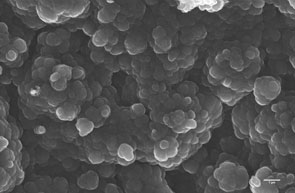
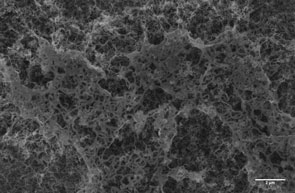
layered titanate nanosheets layered titanate nanosheets
Left: Polypyrrole electrodeposited on conventional titanium. Right: Polypyrrole electrodeposited on multi-walled carbon nanotubes (Images: Webster Lab, Brown University)
Reporting their findings in the January 17, 2011 online issue of Nanotechnology ("Electrically controlled drug release from nanostructured polypyrrole coated on titanium"), Webster and his team demonstrate a 'proof of concept' to develop and evaluate on-demand delivery of penicillin/streptomycin (antibiotics used to treat grampositive and gram-negative bacteria) and dexamethasone (a glucocorticoid used clinically as an anti-inflammatory and immunosuppressive agent) in situ from polypyrrole. It shows that medications can be deployed on demand from the surface of bone implants to reduce the prevalence of both septic and aseptic complications.
This work is an extension of previous studies from Webster's nanomedicine lab demonstrating that these nanostructured materials sense and promote new bone growth ("Greater osteoblast functions on multiwalled carbon nanotubes grown from anodized nanotubular titanium for orthopedic applications"and "Multiwalled carbon nanotubes enhance electrochemical properties of titanium to determine in situ bone formation").
To create their polymer coating, the researchers first grew multi-walled carbon nanotubes (approx. 55nm in diameter) out of anodized nanotubular titanium using cobalt-catalyzed chemical vapor deposition. Polypyrrole monomers were either oxidized with the antibiotics or the dexamethasone before electrochemical polymerization of the polypyrrole around these nanotubes was carried out.
"Anionic drugs, bound electrostatically inside the polypyrrole thin film, were released in our present study by the application of a negative voltage," explains Webster. "For the first five cycles, we observed the anionic molecules to move in and out of the polypyrrole thin film due to continuous oxidation and reduction. The reduction peaks of penicillin/streptomycin release disappeared after 15 cyclic voltammetry cycles. For dexamethasone, the reduction peak was still observed after 25 cycles, but disappeared after 40 cycles."
The increase in the amount of drugs released after the electrical excitation was significant until 5 cycles. The cumulative release of penicillin/streptomycin and dexamethasone approached 80% of the drug and no further drug release was observed with further cycles.
Webster notes that, although they found that polypyrrole can be overoxidized and lose its electroactivity at higher potentials or when voltages are applied for longer periods, carbon nanotubes can maintain and prolong the electroactivity of polypyrrole due to their excellent conductivity properties.
He points out that polypyrrole can be doped not only with antibiotics and drugs like dexamethasone – allowing the preloading of drugs to obtain clinically controllable and predictable doses – but also various other biomolecules such as for instance growth factors, peptides, enzymes, antibodies, proteins, etc. to alter its biological, physical, chemical and electrical properties to design a controlled released system for numerous biomedical applications.
In addition, polypyrrole can be coated on electrodes or integrated with implantable chips to introduce an electrical signal into the biological environment.
"These preliminary results lay the foundation for developing intelligent orthopedic drug delivery technologies that can utilize a closed-loop sensing process with drug administration based on that sensing information," says Webster. "Both carbon nanotube-based sensors and controllable drug delivery systems could be an excellent way to improve the lifetime of orthopedic implants, allowing implants to kill bacteria, reduce the susceptibility of implants to prolonged inflammatory responses and ultimately increase bone formation."
By Michael Berger. Copyright 2011 Nanowerk

Monday, January 24, 2011

Professor Thomas Webster Named Scientist of the Week by Laboratory Equipment

Thomas WebsterEvery Thursday, Laboratory Equipment features a Scientist of the Week, chosen from the science industry’s latest headlines. This week’s scientist is Thomas Webster from Brown Univ. Webster and his team developed “liquid bone,” or a new kind of liquid that can be injected directly into broken bones and solidifies in seconds. Over time, new bone tissue will take its place, encouraged by natural growth factors embedded in the synthetic molecules of the material.
Q: Why did you decide to research and develop “liquid bone”? 
A: We received a lot of advice from medical doctors to explore materials other than titanium (or metals) for orthopedic applications. Basically, the clinical community was telling us to come up with something novel and more natural than what is being implanted today. The materials developed here, we call twin base linkers (or TBLs) originally come from DNA base pairs which are modified before use. Thus, we developed a material that comes from DNA. How natural is that!

We also got a lot of input from clinicians to develop materials which are injectable and thus would limit the amount of surgery required. Since the patient needs to heal from both the surgery and the new implant, the idea here was to limit the healing needed from the surgery by potentially using just a syringe to inject the material into the tissue defect. That way, healing time is minimized, and hopefully the healing process is accelerated to have quicker, healthier bone.

Q: Why do you feel this research is important to your field of study, and beyond?
A:
 I think, or rather hope, the material we developed will push the field to think outside of the box. We need to be really creative to create better implant materials. The fact that the hip implant has not changed that much since that first designed by Charnley in the 1960s disappoints me. So we are starting by throwing all conventional thinking aside to develop more natural nanostructured materials to be injected to heal tissues. Our tissues are naturally nanostructured, by the way.

Q: What was the most surprising thing you found in your research/process? 
A: The most surprising aspect of the material we developed is how quickly it solidifies into a material just as strong as bone. Usually, for injectable materials, you have to give up strength for fast solidification. By emulating DNA, we have created a material which can solidify within minutes inside the body and posses mechanical strength equivalent to bone. Of course, we can change the concentration of our material to have strengths less than bone and closer to other tissues, like cartilage.

Q: What is the take home message of your research and results? 
A: The bottom line from our approach and material is to look at the body to develop more natural materials and personalize such materials for the patient. For example, we can easily tailor the ability of these materials to grown bone to suite why a particular patient needs an implant. Consider an elderly female who broke her hip due a fall and that she has osteoporotic bone. Right now, that patient would essentially get the same implant as a teenager who was in a car accident. But our material could be modified for the elderly female to promote bone growth more than usual since her bones would be comprised in terms of their ability to grow bone. In a sense, we are creating materials for the future of personalized medicine. That can not be done with today's titanium.

Q: What is next for you and your research?
A: 
We need to do a lot more animal testing and then eventually human clinical trials. But we have a great team, with Dr. Hicham Fenniri from the Univ. of Alberta and our industry colleagues to help.

Compiled by Michelle Longo

Tuesday, January 18, 2011

Magnetically controlled pills could boost body’s absorption of drugs

Many drugs can only be absorbed in very specific parts of the intestine. In a new paper, Brown University scientists describe a new system that can safely hold a magnetic gelatin capsule in place anywhere in the gastrointestinal tract of a rat. In humans, the system could improve drug delivery and pharmacological research.
A place for everything
A tiny magnet inside a gelatin capsule allow researchers
to hold medicine at an exact place in the intestine
where it is best absorbed.
Credit: Mathiowitz Lab/Brown University 

PROVIDENCE, R.I.  — Do you want that in a pill or a shot?
Most patients never have that choice. The problem with administering many medications orally is that a pill often will not dissolve at exactly the right site in the gastrointestinal tract where the medicine can be absorbed into the bloodstream. A new magnetic pill system developed by Brown University researchers could solve the problem by safely holding a pill in place in the intestine wherever it needs to be.
The scientists describe the harmless operation of their magnetic pill system in rats online the week of Jan. 17 in theProceedings of the National Academy of Sciences. Applied to people in the future, said senior author Edith Mathiowitz, the technology could provide a new way to deliver many drugs to patients, including those with cancer or diabetes. It could also act as a powerful research tool to help scientists understand exactly where in the intestine different drugs are best absorbed.

Hold it right there!
As a magnet moves closer and farther from a small magnetic pill in a rat’s intestine, it keeps track of the force between it and the pill. The technology can be used to safely hold a pill in the right place to maximize absorption of the medicine it carries.
 Credit: Mathiowitz Lab/Brown University


“With this technology you can now tell where the pill is placed, take some blood samples and know exactly if the pill being in this region really enhances the bioavailability of the medicine in the body,” said Mathiowitz, professor of medical science in Brown’s Department of Molecular Pharmacology, Physiology, and Biotechnology. “It’s a completely new way to design a drug delivery system.”
The two main components of the system are conventional-looking gelatin capsules that contain a tiny magnet, and an external magnet that can precisely sense the force between it and the pill and vary that force, as needed, to hold the pill in place. The external magnet can sense the pill’s position, but because the pill is opaque to x-rays, the researchers were also able to see the pill in the rat’s bodies during their studies.
Safety first
The system is not the first attempt to guide pills magnetically, but it is the first one in which scientists can control the forces on a pill so that it’s safe to use in the body. They designed their system to sense the position of pills and hold them there with a minimum of force.
“The most important thing is to be able to monitor the forces that you exert on the pill in order to avoid damage to the surrounding tissue,” said Mathiowitz. “If you apply a little more than necessary force, your pill will be pulled to the external magnet, and this is a problem.”
To accomplish this, the team including lead author and former graduate student Bryan Laulicht took careful measurements and built an external magnet system with sophisticated computer control and feedback mechanisms.
“The greatest challenges were quantifying the required force range for maintaining a magnetic pill in the small intestines and constructing a device that could maintain intermagnetic forces within that range,” said Laulicht, who is now a postdoctoral scholar at MIT.
Even after holding a pill in place for 12 hours in the rats, the system applied a pressure on the intestinal wall that was less than 1/60th of what would be damaging.
The next step in the research is to begin delivering drugs using the system and testing their absorption, Mathiowitz and Laulicht said.
“Then it will move to larger animal models and ultimately into the clinic,” Laulicht said. “It is my hope that magnetic pill retention will be used to enable oral drug delivery solutions to previously unmet medical needs.”
In addition to Mathiowitz and Laulicht, authors on the paper include Brown researchers Nicholas Gidmark and Anubhav Tripathi. Brown University funded the research.

Thursday, January 13, 2011

Professor Thomas Webster edits biotech books


Thomas Webster, associate professor of engineering, has edited two recently published books. Nanotechnology Enabled In Situ Sensors for Monitoring Health is a compilation of recent research that uses the rapidly growing field of nanotechnology to design sensors to be used to diagnose and treat a variety of diseases. Biomaterials for Artificial Organs, which Webster edited with Michael Lysaght, a former Brown professor and director of the Center for Biomedical Engineering, reviews the latest synthetic materials often used as a substitute for organ transplantation